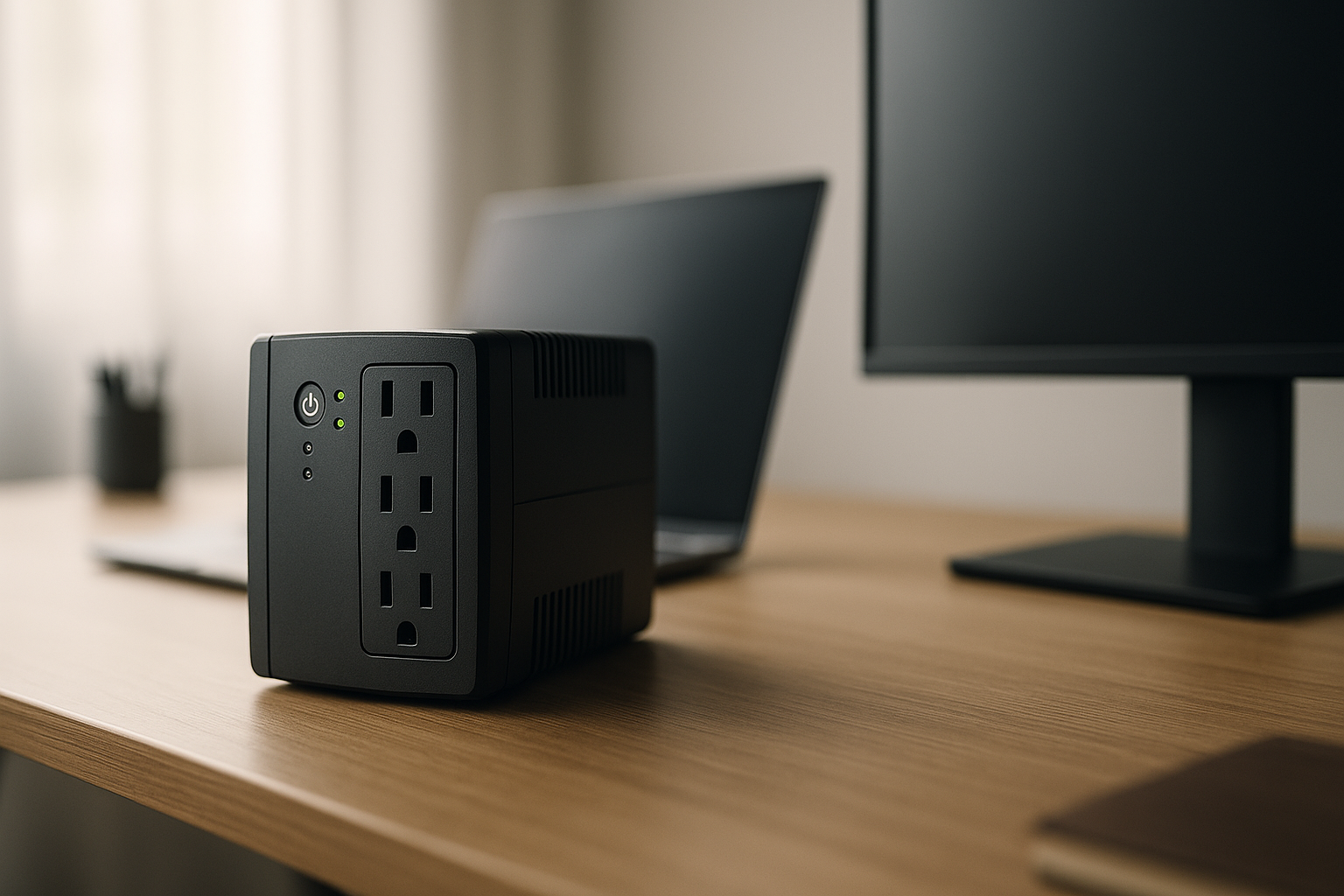
Best Portable Generator for Apartments: Quiet & Legal Options

Photo by Zendure Power Station on Unsplash
Best Portable Generator for Apartments: Quiet & Legal Options
Apartment living comes with unique constraints: noise ordinances, storage limits, and landlord restrictions that rule out standard portable generators. This guide cuts through the noise (literally) to show you which portable generators are actually legal and practical for apartments, and when a battery-powered alternative makes more sense.
Why Most Portable Generators Don’t Work in Apartments
The typical 5,000–7,000W gas generator sits in your garage or yard during a power outage. In an apartment, that’s impossible. You’re limited to:
- Balcony or patio use (if your lease allows outdoor equipment)
- Hallway or common area (almost always prohibited)
- Indoor closet or bedroom (dangerous and illegal in most jurisdictions)
Conventional generators also violate noise ordinances in most cities. A standard 5,000W model runs at 85–95dB—louder than a lawnmower. Apartment noise codes typically cap outdoor sound at 60–70dB during daytime hours and lower at night. Your neighbors will complain, your landlord will fine you, and you may face legal action.
The legal reality: Most apartments explicitly ban gas generators indoors due to carbon monoxide (CO) risk. Even outdoor use is restricted in many buildings. Battery-based power stations and ultra-quiet inverter generators are the only compliant options.
Inverter Generators: The Quietest Gas Option
If you can use a gas generator on a balcony or patio and your lease permits it, an inverter generator is the only responsible choice. These machines regulate voltage electronically, making them quieter and safer for sensitive electronics than conventional models.
Key specs to hunt for:
- Noise level under 65dB at quarter load (the typical operating point)
- Inverter technology (non-negotiable)
- Fuel efficiency — look for models that run 8+ hours on a single tank at 50% load
- Compact weight — under 100 lbs if you’re moving it in and out regularly
Per manufacturer specifications and aggregated Amazon owner reviews, inverter generators in the 2,000–3,500W range hit the noise-level sweet spot. Below 2,000W, you’re limited to charging phones and running a few outlets. Above 3,500W, weight and noise creep up fast.
Fuel type matters: Propane models run cleaner and quieter than gasoline, but propane bottles take up storage space. Gasoline is denser (more runtime per tank), but you’ll smell it. Dual-fuel units split the difference but cost more and weigh more.
Battery-Powered Power Stations: The Apartment-Friendly Default
Battery stations (also called portable power stations or solar generators) have become the practical standard for apartment backup power. They’re silent, produce zero emissions, require no fuel storage, and most landlords approve them explicitly in lease language.
Why they win for apartments:
- Silent operation — no generator noise, no neighbor complaints
- No emissions — safe to charge indoors or on a balcony
- No fuel smell — won’t irritate neighbors or attract pests
- Scalable capacity — from 200Wh (phone charging) to 5,000Wh (run a fridge for hours)
- Stackable expansion — many models let you chain batteries for more runtime
The trade-off: Battery stations cost more per watt-hour than gas generators, and they deplete faster under heavy load. A 1,000Wh station might power a laptop for 10 hours but a space heater for only 1–2 hours. You’ll also need solar panels or a wall outlet to recharge—you can’t just buy a can of fuel.
Most residents use battery stations for:
- Phone and laptop charging during outages
- Running a WiFi router and lights
- Powering a small refrigerator for 4–8 hours
- Running a CPAP machine overnight
For whole-home backup, battery stations are a supplement, not a replacement. Many apartment dwellers stack a battery station with a smaller inverter generator stored outdoors (with landlord permission) for extended outages.
Capacity and Runtime: Matching Your Needs
Apartment power needs are predictable. During an outage, most residents want to:
- Keep lights on (LED bulbs: 5–15W each)
- Charge phones and laptops (50–100W total)
- Run a WiFi router (10–20W)
- Power a refrigerator (150–800W depending on model, but cycles on/off)
Rough capacity guide:
- 200–500Wh: Phone and laptop charging only. Good for renters with minimal backup needs.
- 500–1,000Wh: Lights, WiFi, phones, and a fridge for 4–8 hours. Covers most apartment outages.
- 1,000–2,000Wh: Everything above, plus a space heater or microwave for short bursts. Overkill for apartments unless you have medical equipment.
Most apartment dwellers find a 500–1,000Wh battery station meets 80% of realistic outage scenarios. Anything larger becomes hard to move and expensive to recharge.
Runtime example: A 1,000Wh station powering a 150W refrigerator (which cycles 30% on, 70% off) runs for roughly 20 hours. Add WiFi and lights, and you’re at 12–15 hours. This covers a typical grid outage.
Noise Levels Explained
Decibel (dB) scales are logarithmic—every 10dB increase is perceived as roughly double the loudness. Here’s context:
- 50dB: Quiet office, library (threshold of most apartment ordinances)
- 60dB: Normal conversation, background music
- 65dB: Busy traffic, moderate alarm
- 75dB+: Lawn mower, alarm clock (violates most apartment noise codes)
Inverter generators marketed as “quiet” typically run at 60–68dB at quarter load. At full load, they climb to 75–85dB, which will trigger noise complaints.
Battery stations are effectively silent (under 30dB), making them the noise-friendly choice. Some models have small cooling fans that audibly hum under heavy load, but even these are quieter than a whisper compared to any gas generator.
Legal Considerations and Lease Restrictions
Before buying any generator, check three documents:
- Your lease — most apartments explicitly ban gas generators. Some allow battery stations or specify approved models.
- Local noise ordinance — search “[your city] noise ordinance” on the municipal website. Most cap outdoor noise at 60–70dB daytime, 50–60dB night.
- HOA or building rules — condos and managed apartments often have stricter rules than landlord-tenant leases.
Common lease language:
- “No fuel-burning appliances except in designated areas” (rules out gas generators)
- “Battery-powered backup devices allowed with prior written approval” (battery stations OK)
- “No generators without landlord consent” (you need permission in writing)
Many landlords allow battery stations because they’re low-risk. Gas generators, even outdoor, are often prohibited due to noise, fume, and fire hazard liability.
If your lease is silent on generators: Get written permission from your landlord before buying. An email saying “I’d like to keep a battery power station on my balcony for outages—is that OK?” protects you both. If they say no, a battery station is easier to hide than a gas generator, but respecting the lease keeps your deposit safe.
When to Choose Battery vs. Gas
Choose a battery power station if:
- Your lease prohibits gas generators (most do)
- You live in a noise-sensitive building or dense urban area
- You want zero emissions and no fuel storage
- You’re willing to recharge via solar panels or a wall outlet
- Your outages are typically short (under 12 hours)
- You have limited storage space
Choose an inverter generator if:
- Your lease explicitly allows outdoor gas generators
- You live in a rural area or a building with lenient rules
- You need extended runtime (24+ hours) without recharging
- You can store fuel safely and legally
- You want the lowest cost per watt-hour
- You’re willing to manage noise and neighbor relations
For most apartment dwellers, a battery station is the practical answer. The legal and neighbor-relation headaches of a gas generator outweigh the cost savings.
Top Picks for Apartment Backup Power
For ultra-compact storage (4–8 hour fridge backup): DJI Power 500 offers 500Wh in a footprint smaller than a shoe box. Ideal if your apartment has minimal closet space and you need to keep a small fridge running overnight.
For quiet gas backup with landlord approval (noise-sensitive buildings): 
For balanced capacity and portability (overnight balcony use): EcoFlow Delta 2 pairs 1024Wh of storage with a compact form factor and optional solar expansion. Powers a small refrigerator for 8+ hours and handles most apartment outage scenarios without disturbing neighbors.
For budget-conscious renters (cost-effective gas option): Champion 3100W Inverter Generator is a budget-tier option if you need gas backup with landlord approval. Quieter than conventional models and costs less than premium inverter units, though heavier and louder than battery alternatives.
For running medical equipment overnight (CPAP, oxygen concentrator): Jackery Explorer 1000 Plus is a battery-only backup with 1000Wh capacity. Zero fuel smell, no carbon monoxide risk, and most landlords approve battery stations explicitly in lease language.
Recharging and Fuel Logistics
Battery stations recharge via:
- Wall outlet (110V or 220V) — 4–8 hours for full charge
- Solar panels — 6–12 hours depending on sunlight and panel wattage
- Car 12V outlet — slow but useful during extended outages if you have gas in your vehicle
Most apartment dwellers keep a battery station charged year-round and top it up after an outage. Recharging via solar panels is practical if you have a balcony facing south or west.
Gas generators require:
- Fuel storage — a 5-gallon can takes up closet space and smells
- Fuel rotation — gasoline degrades after 6 months; you must use it or add stabilizer
- Regular maintenance — drain fuel before winter storage in cold climates, change oil annually
Battery stations win on convenience. You don’t buy fuel, smell fumes, or maintain engines.
FAQ
Q: Can I run a gas generator inside my apartment? A: No. Gas generators produce carbon monoxide, which is odorless and deadly indoors. Even in a garage adjacent to your apartment, CO can seep into living spaces. All jurisdictions prohibit indoor generator use.
Q: Will my landlord allow a battery power station? A: Most will. Battery stations are low-risk, silent, and emit nothing. Check your lease or email your landlord to confirm. If the lease is silent, a written OK protects you both.
Q: What’s the difference between Wh and Ah? A: Wh (watt-hours) measures total energy storage; Ah (amp-hours) measures charge capacity. A 1,000Wh battery at 48V equals roughly 21Ah. Wh is more useful for apartment planning because it directly tells you how long a device will run. For example, a 1,000Wh battery powers a 100W device for 10 hours.
Q: What’s the quietest portable generator for apartments? A: Battery-powered stations are silent (under 30dB). If you need a gas generator, inverter models under 2,500W run at 60–65dB at quarter load, which is the quietest gas option available and the only type legal in most apartments.
Q: Can I use solar panels to recharge a battery station on my balcony? A: Yes, if your lease allows. A 100–200W solar panel on a south-facing balcony recharges a 1,000Wh battery in 6–8 hours on a sunny day.
Q: Do I need a permit to use a generator in my apartment? A: Check your local building code and lease. Most cities don’t require permits for battery stations, but gas generators may need approval. Some jurisdictions require electrical permits if you’re hardwiring a generator to your home. Ask your landlord and local building department before installing anything permanent.
Q: Can I use a generator in a condo with an HOA? A: Check your HOA bylaws first—many prohibit gas generators entirely. Battery stations are usually permitted since they’re silent and emit nothing. Submit a written request to your HOA board with photos of the unit and its placement. Getting approval in writing protects you from fines or forced removal.
Closing Thoughts
Apartment backup power isn’t one-size-fits-all. For most renters, a 500–1,000Wh battery station solves 80% of realistic outage scenarios—lights, WiFi, phone charging, and a few hours of refrigerator runtime. It’s silent, legal, and requires no fuel or maintenance.
If your lease explicitly allows outdoor gas generators and you live in a building with lenient noise rules, an ultra-quiet inverter model is a cost-effective alternative. But the legal and neighbor-relation friction makes battery stations the practical default.
Start by checking your lease and local noise ordinance. Then size your battery or generator to match your actual needs—most apartments don’t need whole-home backup, just enough to stay comfortable and connected until power returns.