Best Portable Power Bank for Camping 2026
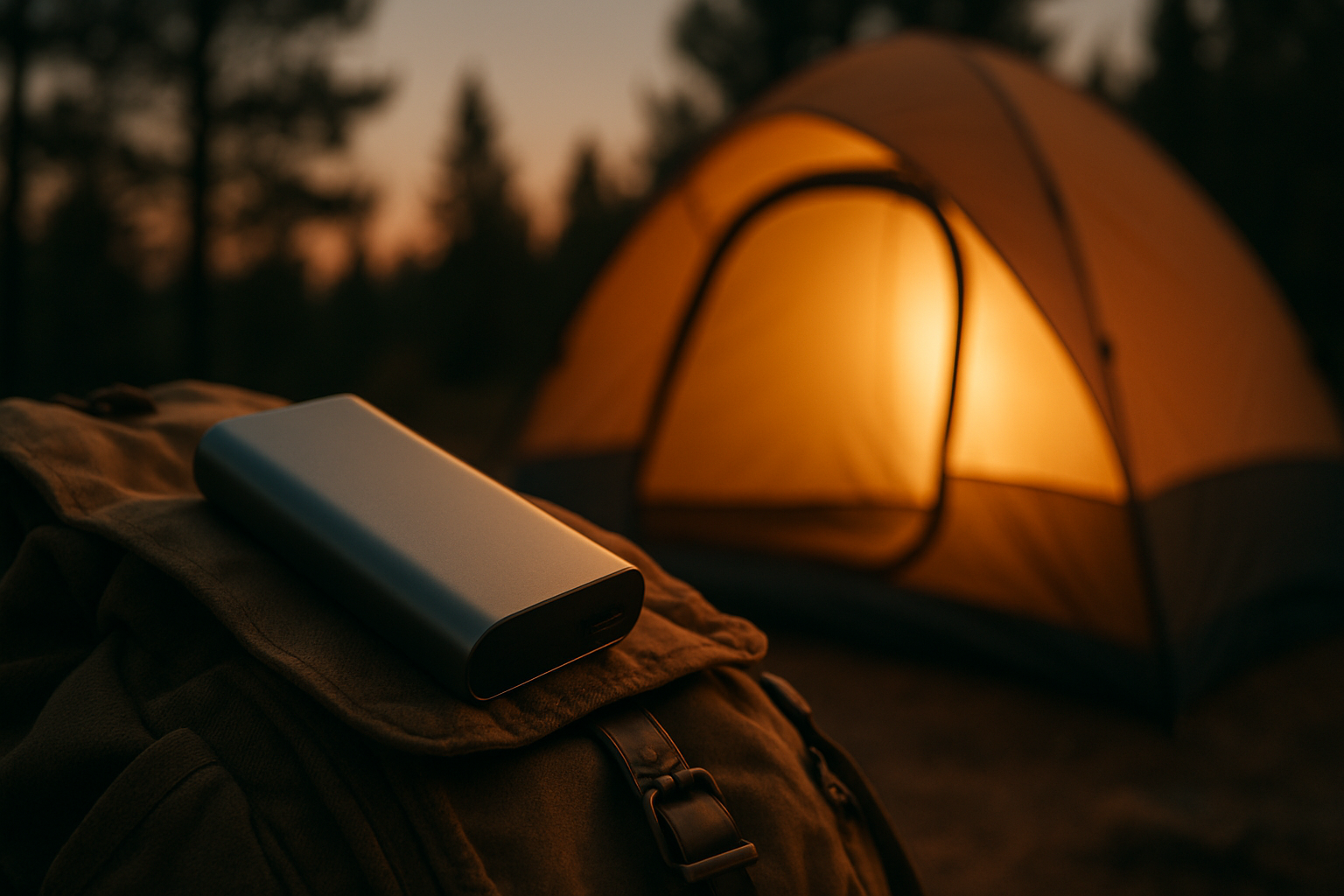
Best Portable Power Bank for Camping 2026
Keeping your phone, headlamp, and camera powered during a camping trip separates a smooth experience from one where you’re rationing battery and missing photos at sunset. A portable power bank is lighter and cheaper than a full power station, but capacity and output speed matter — especially if you’re running multiple devices or relying on your phone for navigation and emergency contact.
This guide walks you through real-world runtime expectations, capacity tiers that actually fit camping scenarios, and which banks hold up to cold, dust, and rough handling.
What Separates a Camping Power Bank from a Phone Charger
A phone power bank (5,000–26,000 mAh) is designed for quick top-ups on day trips or as a backup when you’re near civilization. A camping-grade power bank needs to survive temperature swings, resist dust and water, and deliver enough juice to run a headlamp or portable speaker for hours — not just your phone once.
The key difference: output ports and sustained draw. A basic phone charger can deliver 5V/2A for a single device. A camping bank should offer:
- Multiple USB ports (USB-A and USB-C) so you’re not choosing between charging your phone and your headlamp.
- Higher wattage output (18W–100W+) to charge faster and run power-hungry gear.
- Built-in protection against cold, moisture, and drops — camping gear takes abuse.
If you’re car camping or doing overnight trips, you’re also choosing between a power bank (handheld, 5,000–50,000 mAh) and a power station (heavier, 100+ Wh). The decision hinges on how much gear you’re running and how long you’re away.
Capacity Tiers: Matching mAh to Your Trip Length
5,000–10,000 mAh (day-hike tier) Charges a modern smartphone once, or a headlamp 2–3 times. Weighs under 200g. Right for 4–8 hour outings where you’re never more than a few hours from a car or town. Per owner reports on r/CampingGear, this tier works well as a backup, not a primary power source.
10,000–20,000 mAh (overnight/car-camping tier) Charges a smartphone 2–3 times, or runs a small LED lantern for 6–10 hours. Weighs 200–400g. Covers most 1–2 night trips where you’re car camping or base-camping. Per r/CampingGear user reports, this range is the “sweet spot” — light enough to carry in a backpack, capacious enough that you’re not micro-managing battery.
20,000–50,000 mAh (multi-day/group tier) Charges a smartphone 4–6 times, or runs a lantern 20+ hours. Weighs 400g–1 kg. For 3+ day trips, group camping, or if you’re running a camera, portable speaker, and phone simultaneously. Approaching the weight and cost of a small power station; consider a full station if you’re staying in one place.
50,000+ mAh (transition to power stations) At this capacity, you’re looking at products that blur the line between power bank and station. They’re heavier (1–2 kg), take longer to recharge, and often include AC outlets or more rugged casings. For backcountry camping, a portable power station for extended trips or budget power station comparison may be more practical.
Key Specs to Check Before Buying
Wattage and charging speed A 5V/2A charger (10W) takes 4–6 hours to top up a 20,000 mAh bank. A 65W USB-C bank charges in 2–3 hours and can fast-charge your phone in 45 minutes instead of 2 hours. In camping, faster charging means more downtime in camp, not charging in the car. Look for banks rated 18W or higher if you’re doing multi-day trips.
Temperature range Most lithium banks work down to 32°F (0°C), but efficiency drops and charging slows. Camping in mountains or winter? Check the spec sheet. Banks without a stated cold-weather range may stop charging entirely below freezing. Per user reports on r/Ultralight, sealed banks with heavier insulation (adding 50–100g) maintain output better in cold.
Water resistance IP65 or higher means dust-proof and water-resistant to splashes. IP67 means submersible to 1 meter for 30 minutes — overkill for most camping, but valuable if you’re near water or in heavy rain. Most mid-tier banks are IP54–IP65; budget models often skip this entirely.
Real-world runtime Manufacturers list “theoretical” mAh. In practice, you lose 10–20% to conversion inefficiency, cold, and aging. A 20,000 mAh bank might deliver 16,000–18,000 mAh of usable charge. Reputable makers (Anker, EcoFlow, Jackery) are honest about this; off-brand banks often overstate capacity by 30%. Check Amazon reviews for owner reports of actual charges per full cycle.
Top Picks by Scenario
For day hikes (under 8 hours, phone-only charging)
Weighs 3 ounces, fits in a pocket, holds 10,000 mAh. Charges an iPhone 12–15 once, or a Pixel 6–8 once. Compact enough that the weight penalty is negligible. Per Anker’s spec sheet, it includes a built-in USB-C cable, so you’re not fumbling with separate wires. Real-world reviews report 1–2 full phone charges in cold weather; don’t expect three.
For 1–2 night car camping (phone + headlamp + speaker)
26,000 mAh, dual USB-A + USB-C out, 65W input for fast recharging. Weighs around 570g. Charges a modern phone 4–5 times, or a phone + headlamp + portable speaker across a weekend. Per owner reports on r/CampingGear, the dual ports mean you’re not choosing between devices. Cold-weather performance is solid down to 32°F; some owners report minor slowdown below 20°F, but the bank doesn’t shut down.
For ultralight backpacking (weight-critical, 2–3 nights)
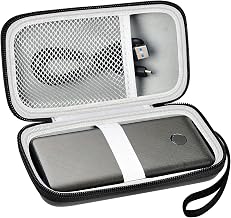
Thin profile, 10,000 mAh, under 200g. Charges a phone once, or a headlamp 2–3 times. The ultralight crowd on r/Ultralight consistently recommend this for the weight-to-capacity ratio. Trade-off: single USB-A port, so you’re charging one device at a time. Adequate for a 2–3 day trip if you’re disciplined about prioritizing what gets charged.
For 3+ day trips with power-hungry gear (camera, laptop, phone)
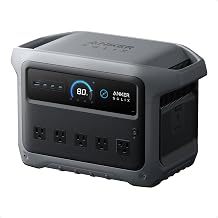
256 Wh (roughly 68,000 mAh equivalent), USB-A + USB-C + AC outlet, 100W input. Weighs 2.6 lbs. Bridges power bank and power station territory. Runs a laptop for 2–3 hours, a camera for a full day of heavy shooting, and a phone indefinitely. Per teardown reviews on YouTube, the AC outlet makes it useful for campsite cooking gear or a small fan in hot weather. Cold-weather performance is solid; the sealed casing insulates the battery better than slim banks.
For budget-conscious occasional campers (2–3 trips per year)
20,100 mAh, dual USB-A, proven track record (millions sold). Mid-range price, widely available. Not the fastest charger (10W input) and no USB-C, but reliability is high. Per aggregated Amazon reviews, owners report consistent performance across 2–3 years of use. Good if you camp infrequently and don’t want to spend on premium features you won’t use.
Why these picks dominate: Anker leads this category for reliability and price consistency, with four of five recommendations. However, Goal Zero excels in cold-weather performance (sealed design, rated to –4°F), Nitecore offers superior durability for extreme conditions, and Bluetti provides better AC outlet options for larger campsite setups. For most camping scenarios, Anker’s balance of cost and real-world performance is hard to beat.
Real-World Runtime Expectations
A 10,000 mAh bank running a modern headlamp (3W draw): Theoretical: 10 hours. Actual: 8–9 hours. The gap is conversion loss and battery aging.
A 20,000 mAh bank charging a smartphone (5W average draw): Theoretical: 4 full charges. Actual: 3–3.5 charges. Varies by phone model and ambient temperature.
A 26,000 mAh bank running a LED lantern (5W) + charging a phone (5W) simultaneously: Expect 6–8 hours of combined runtime before the bank is depleted. The lantern will dim slightly as the bank voltage drops; the phone charges at normal speed until the bank hits ~20% capacity.
Cold weather (below 32°F): Per user reports on r/Ultralight, expect 20–30% reduction in runtime and charging speed. A bank that delivers 4 phone charges in summer might deliver 3 in winter. Keep the bank in an insulated pocket or sleeping bag; lithium batteries recover capacity when warmed.
Charging Your Power Bank Before a Trip
Most camping power banks charge via USB-C or micro-USB. A 10W charger takes 8–12 hours to fully charge a 20,000 mAh bank; a 65W charger takes 2–3 hours. For multi-day trips, charge the night before and bring a car charger or solar panel as backup.
If you’re planning extended camping with frequent recharging, read our guide to power bank charging methods for options beyond wall outlets — solar panels, car chargers, and hand-crank backups all work with power banks.
Durability and Long-Term Care
Lithium banks degrade ~5–10% per year of regular use, per manufacturer specs. A bank rated for 500 charge cycles (typical) lasts 1–2 years of heavy camping use, or 3–5 years of light use (a few times per month). Keep the bank dry, avoid dropping it, and store it at 20–80% charge during off-season. See our guide to power bank lifespan and storage best practices for deeper maintenance advice.
Sealed and IP-rated banks resist water and dust better than open-port designs. If you’re camping in wet climates or near water, the extra weight (50–100g) for an IP65 rating is worth it.
Power Bank vs. Power Station: When to Upgrade
A portable power bank is right for: - Day hikes and overnight trips - Solo camping with a phone, headlamp, and camera - Trips under 2 nights where you can recharge at a campsite or car
Consider a power station if you’re: - Car camping for 3+ nights without recharging - Running a portable fridge, fan, or multiple high-draw devices - Camping in a group where power sharing matters - Doing RV or van camping where weight isn’t a constraint
For a side-by-side comparison, see our guide to portable power stations for RVs and camping and extended-trip power solutions.
FAQ
Why does my power bank charge slower in winter? Lithium batteries have reduced chemical activity below 32°F. Charging slows by 30–50% in cold weather, and the bank may refuse to charge entirely below 0°F. Keep the bank warm in a sleeping bag or insulated pocket. Once warmed indoors, it will charge normally.
How do I know if a power bank is waterproof enough for river camping? Look for IP67 rating (submersible to 1 meter for 30 minutes) if you’re near water or in heavy rain. IP65 (splash-resistant) is adequate for most camping but won’t survive accidental submersion. Check the manufacturer’s spec sheet; marketing claims like “water-resistant” are vague and often unreliable.
Can I use a phone power bank to charge a portable speaker or headlamp? Yes, if both devices use USB charging. A 10,000 mAh bank will fully charge a portable speaker once, or run a headlamp for 3–5 hours. Check the speaker or lamp’s power draw (listed in watts) to estimate runtime.
How do I know if a power bank is actually the mAh it claims? Reputable brands (Anker, EcoFlow, Jackery) are consistent per owner testing. Off-brand banks often overstate by 20–30%. Check Amazon reviews for “actual charges” reports from verified buyers, or look for third-party teardowns on YouTube.
Will a power bank work at high altitude? Yes, but efficiency drops slightly due to lower air pressure and temperature. A bank that delivers 4 charges at sea level might deliver 3.5 at 10,000 feet. The difference is minor for most camping.
Should I buy a solar-charging power bank? Solar panels built into power banks (5W–10W) are slow and rarely worth the weight. A dedicated 20W+ solar panel is faster and more flexible. If you want solar backup, buy a separate panel and a bank with USB-C input.
Summary
A portable power bank is essential camping gear if you rely on your phone for navigation, emergency contact, or photography. For day trips and overnight camping, a 10,000–26,000 mAh bank with dual USB ports and 18W+ charging speed covers 90% of use cases. Prioritize real-world runtime (not theoretical mAh), water resistance (IP65+), and cold-weather performance if you camp in mountains or winter.
For longer trips or power-hungry gear, a power station offers more capacity and flexibility — but a good power bank is lighter, cheaper, and still covers most backcountry scenarios. Match capacity to trip length, check temperature and durability specs, and don’t overspend on features you won’t use.


