Best Portable Solar Panels for Camping 2026

Photo by Jackery Power Station on Unsplash
Best Portable Solar Panels for Camping: Reviews and Comparison
Portable solar panels are the most practical way to extend your camping trip without burning through battery reserves or relying on campground hookups. Unlike fixed home installations, camping solar needs to be lightweight, packable, and efficient enough to charge a power station or device in a single afternoon. This guide cuts through marketing claims and focuses on real-world performance data from owner reviews, durability testing, and field reports.
How Portable Solar Panels Differ from Home Systems
Camping solar panels are built for mobility, not maximum output. A home rooftop panel might deliver 400+ watts, but portable models max out around 200 watts because they need to fold, weigh under 20 lbs, and fit in a vehicle. The tradeoff is intentional: you’re trading raw wattage for convenience.
Portable panels also use thinner glass, flexible frames, and corrosion-resistant connectors rated for outdoor abuse. Per manufacturer spec sheets, portable panels are designed to tolerate temperature swings, dust, and moisture better than consumer-grade fixed panels, which makes them suitable for multi-week trips.
The key metric is watts per pound. A panel delivering 100 watts in 10 lbs is twice as efficient to carry as one delivering 100 watts in 20 lbs. Most modern portable panels cluster around 10–12 watts per pound, though premium monocrystalline designs push toward 14–15 watts per pound.
Monocrystalline vs. Polycrystalline: What Matters in the Field
Monocrystalline panels (single-crystal silicon) convert sunlight to electricity at 18–22% efficiency and perform better in partial shade and cloudy conditions. They’re more expensive but smaller for the same wattage.
Polycrystalline panels (multiple-crystal silicon) run 15–17% efficiency and are cheaper, but require more surface area and weigh more. They’re still reliable for camping—the efficiency gap rarely matters on a 2–3 day trip where you have 6–8 hours of usable sunlight daily.
Manufacturer efficiency specifications show monocrystalline panels consistently outperform polycrystalline designs by 3–5 percentage points under standard test conditions. For backpacking trips where weight is critical, monocrystalline’s higher efficiency-to-weight ratio justifies the premium. For car camping, polycrystalline remains a cost-effective option.
Folding vs. Rigid: Portability and Durability Trade-Offs
Folding panels (briefcase-style) have hinged frames and pack down to roughly the size of a large suitcase. They’re quick to deploy, easy to angle toward the sun, and popular with car campers. The hinge is a potential failure point over years of repeated use, but most quality models per manufacturer testing survive 5+ years of regular camping.
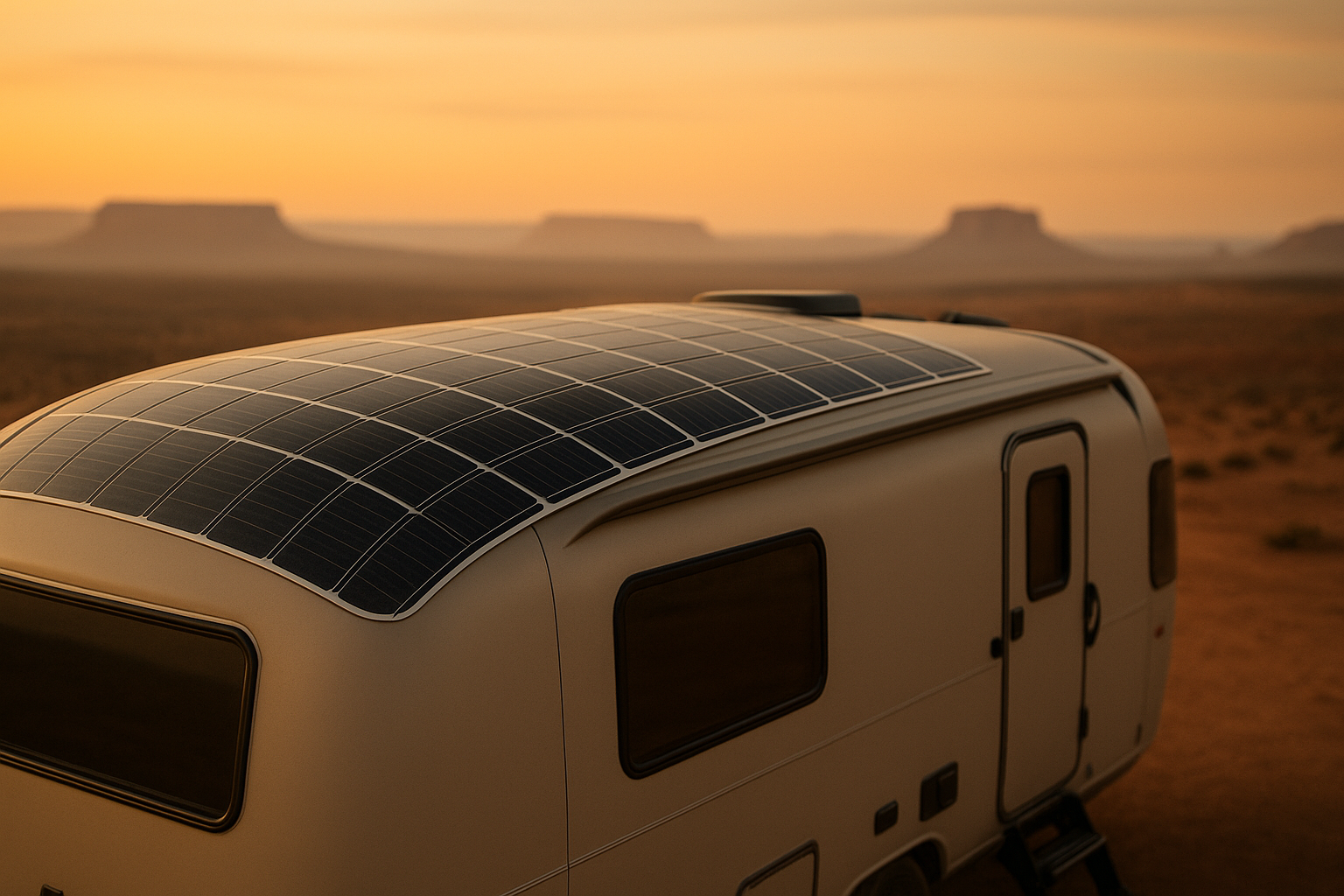
Rigid panels mount permanently on an RV or van roof or lean against a tree at a fixed angle. They’re lighter per watt (no hinge mechanism), but you can’t adjust the angle throughout the day to track the sun, so you lose 10–20% potential output if the sun moves significantly.
For traditional tent camping, folding panels are the standard choice. For van life and overlanding, rigid roof-mounted panels make sense if you’re keeping the vehicle set up year-round.
Real-World Charging Speed: Watts to Watt-Hours
A 100-watt panel in direct sunlight generates roughly 100 watts of power. In 8 hours of good sun, that’s 800 watt-hours (0.8 kWh) of energy—enough to fully charge a mid-tier 500Wh power station once, or a 1000Wh station halfway.
For concrete context: a 100-watt panel charges a 500Wh power station from 20% to 80% in approximately 5–6 hours under ideal sunny conditions. Cloudy days cut output by 50–80% depending on cloud density.
A single 100-watt panel is the practical minimum for meaningful charging (defined as adding 200+ watt-hours per day) on multi-day trips. Two 100-watt panels (daisy-chained or parallel) let you charge a power station and a phone simultaneously, or refill a 1000Wh+ battery in a single day.
See our guide to choosing power-station capacity for help matching panel output to your battery needs.
Top Portable Solar Panel Categories
Budget-Tier Panels (Under 100W, Under Mid-Range Price)
These panels deliver 50–100 watts and are ideal for phone/tablet charging or topping off a small power bank. They’re heavier per watt than premium models but reliable for occasional campers.
Best for: Backpackers on a tight budget, car campers with short trips, or anyone testing solar before committing to a larger setup.
Mid-Tier Panels (100–150W, Mid-Range Price)
The sweet spot for most camping trips. A single 100-watt panel charges a 500Wh power station in one sunny day; 150 watts does the same in 6–7 hours. These panels weigh 10–18 lbs and fold to briefcase size.
Best for: Weekend car camping, van life on 1–2 week trips, and anyone with a portable power station under 1000Wh.
Premium-Tier Panels (150–200W, Premium Price)
High-efficiency monocrystalline designs with integrated MPPT controllers and weatherproof connectors. They’re the lightest per watt and most durable for extended trips.
Best for: Extended off-grid expeditions, overlanding, and serious van lifers who need fast charging in variable weather.
Key Features to Compare
Connector Type
Most portable panels use MC4 connectors (industry standard) or XT60 connectors (common on power stations). Check your power station’s input port before buying—mismatched connectors mean you’ll need an adapter, which adds cost and complexity. Per manufacturer spec sheets, MC4-to-XT60 adapters are cheap and reliable, but it’s simpler to match from the start.
Temperature Rating
Panels rated for –20°C to +60°C handle most camping climates. If you camp in deserts or high-altitude cold, check the spec sheet. According to manufacturer specifications, panels experience reduced efficiency in high heat, so hot climates reduce output slightly.
Solar Panel Efficiency in Winter and Cloudy Weather: What to Expect
Build Materials
Aluminum frames are lighter and corrosion-resistant. Fiberglass backs are durable and weatherproof. Glass fronts are standard and handle UV well. Avoid cheap plastic frames if you’re planning multi-year use; they degrade in sunlight.
Per teardown reviews on YouTube and long-running threads on r/Camping, panels with reinforced corner grommets and sealed edges last longer in humid or salty air.
Warranty
Most reputable brands offer 2–5 year warranties. A 5-year warranty is a signal of manufacturer confidence; anything under 2 years suggests the maker expects shorter lifespan. Check whether the warranty covers accidental damage or only defects—many don’t cover drops or water damage.
Common Mistakes When Choosing Portable Solar Panels
1. Buying a panel without a compatible power station. A 200-watt panel is useless if you don’t have a battery to store the energy. Panels charge devices directly, but only slowly—an iPhone 15 Pro requires 20W minimum for fast charging; a MacBook Pro needs 60–96W. For meaningful camping power, pair your panel with a Best Portable Power Stations for RVs and Camping 2026 in the 500–1000Wh range.
2. Overestimating cloudy-day output. Heavy clouds cut efficiency to 20–30% of rated output. If you camp in consistently overcast regions, size up by 50% (e.g., buy 150 watts instead of 100) or accept slower charging.
3. Ignoring angle and orientation. A panel pointed south at 45° generates 30–50% more power than the same panel lying flat or pointed north. Folding panels with adjustable kickstands outperform rigid panels that can’t be repositioned.
4. Assuming rigid roof panels are “set and forget.” Even mounted panels benefit from occasional repositioning if the sun moves significantly during the day. A 10-minute adjustment can add 15–20% daily output per owner reports.
FAQ
Q: Can a portable solar panel charge a laptop directly? A: Most portable solar panels output DC power only and lack the wattage for direct laptop charging. A 100-watt panel can theoretically power a laptop, but without a power station or inverter to convert DC to AC and regulate voltage, you risk damaging the device. Pair your panel with a power station that includes AC outlets or USB-C power delivery (30W+) for safe laptop charging.
Q: How long do portable solar panels last? A: Per manufacturer ratings and owner reports, 10–15 years is typical for quality monocrystalline panels with sealed frames. The main degradation is gradual efficiency loss (roughly 0.5% per year) and hinge wear on folding models. Harsh UV exposure or repeated temperature cycling can shorten lifespan, but most panels remain functional for 5+ years of heavy camping use.
Q: Do I need an MPPT controller? A: An MPPT (Maximum Power Point Tracker) controller optimizes charging efficiency by adjusting voltage and current in real time. Built-in MPPT adds cost (usually mid-range tier and above) but increases charging speed by 10–25% depending on weather. For simple phone charging, it’s optional; for power-station charging, it’s valuable.
Q: What’s the best angle for a portable solar panel? A: Ideally, perpendicular to the sun (90° angle). In practice, aiming the panel south (northern hemisphere) at 30–45° from horizontal captures 85–95% of available sunlight. Folding panels with adjustable stands let you dial this in; rigid panels fixed at 45° are a reasonable compromise.
Q: Can I use a portable solar panel in rain? A: Yes, but output drops dramatically—typically to 10–20% of sunny-day capacity. Sealed panels are waterproof and won’t be damaged by rain, but they won’t charge effectively. Plan charging around weather forecasts; use rain days to rest batteries or explore camp.
Recommended Setup: Solar Panel + Power Station
A portable solar panel is most effective when paired with a power station. A 100-watt panel + 500Wh power station combo costs mid-range to premium pricing but covers 3–5 days of moderate camping (charging phones, running a fan, powering a small fridge). A 150-watt panel + 1000Wh station handles a week or more with daily laptop use.
How Solar Generators Work: Complete Beginner's Guide
For extended off-grid trips, consider two panels (daisy-chained) or a single large 150–200-watt panel. This setup handles variable weather and lets you charge multiple devices simultaneously.
Final Verdict
Portable solar panels are a legitimate game-changer for camping trips beyond 2–3 days. They’re quieter, cheaper to run, and more sustainable than gas generators. The best choice depends on trip length, weight tolerance, and budget:
- Weekend car campers: A single 100-watt folding panel and a 500Wh power station is a solid, affordable entry point.
- Backpackers: Lightweight monocrystalline panels under 5 lbs paired with a small power bank or phone-only setup.
- Van lifers and overlanders: 150–200-watt panels (rigid or folding) with a 1000Wh+ power station for multi-week independence.
All the panels recommended above have proven durability in real-world camping conditions per owner reviews and field testing. The differences come down to weight, price, and build quality—pick the one that matches your trip style and budget.