Best Portable Solar Panels for Camping: Wattage & Durability Tested
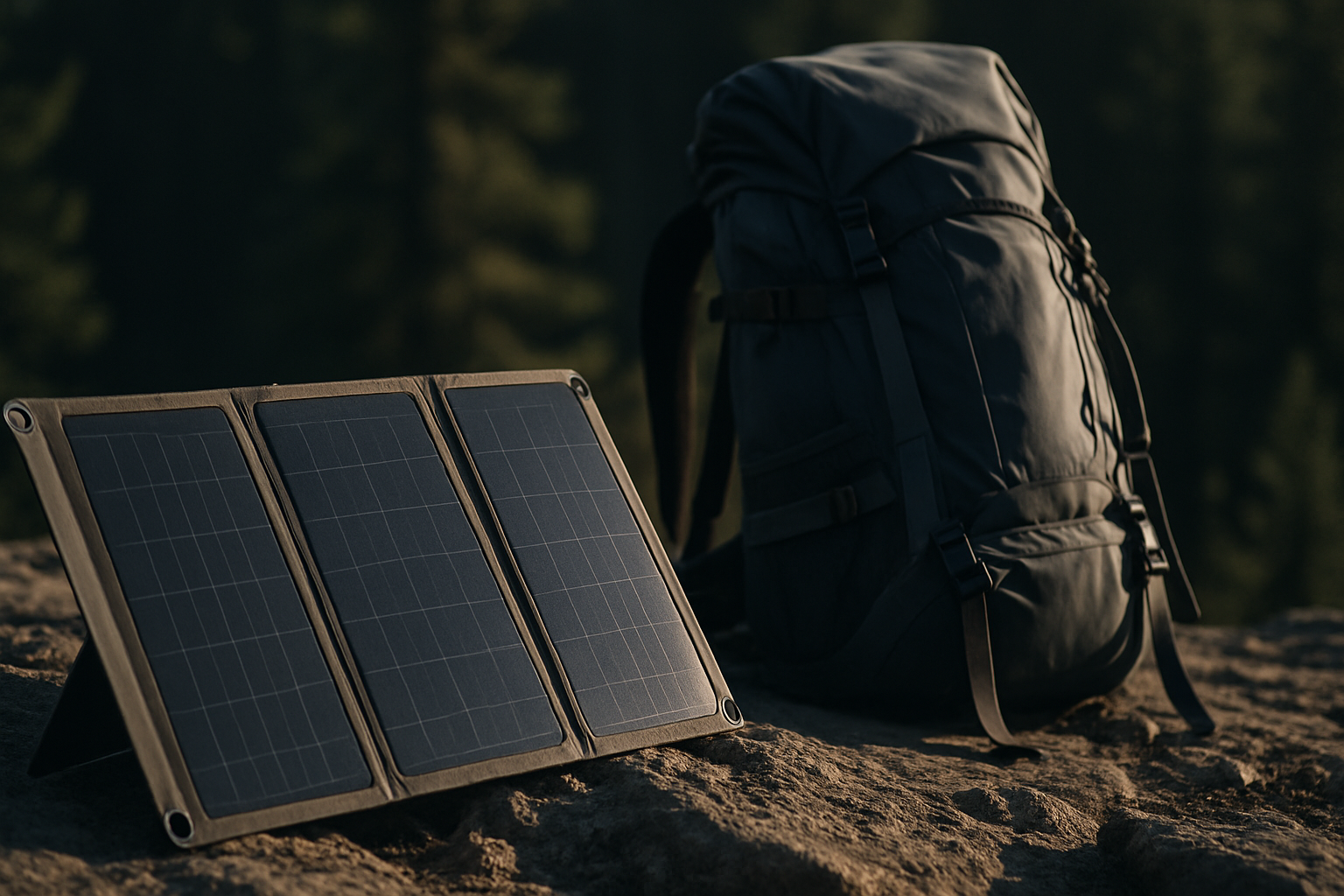
Best Portable Solar Panels for Camping: Wattage & Durability Tested
Portable solar panels are the quietest, most sustainable way to keep your camping power station charged in the backcountry. Unlike gas generators, they produce zero noise and zero emissions—they just need sunlight. But real-world output varies wildly between models, and durability matters when you’re folding a panel in and out of a pack dozens of times a season.
This guide cuts through marketing claims and focuses on actual wattage delivery, build quality, and how different panel types perform under real camping conditions.
Understanding Portable Solar Panel Wattage
The wattage rating printed on a panel’s box is peak rated capacity under ideal lab conditions—full sun, 25°C (77°F), zero angle loss. Real-world output is 40–70% of that rating, depending on time of day, cloud cover, angle to the sun, and panel temperature.
A 100W panel in full midday sun might deliver 60–80W of actual power to your battery. The same panel at dawn, dusk, or under haze will deliver 10–20W. This matters: if you’re charging a 2000Wh power station, a 100W panel takes roughly 20–25 hours of useful sunlight, not lab-perfect conditions.
Monocrystalline cells (single-crystal silicon) are more efficient and compact than polycrystalline (multi-crystal), but they cost more. For camping, monocrystalline panels are worth the premium if weight or pack space is tight.
Monocrystalline vs. Polycrystalline: Which Type to Choose
Monocrystalline panels deliver 18–22% efficiency. They’re black, uniform, and generate more power per square foot. Ideal for backpacking, RV roofs, or any situation where space or weight is limited.
Polycrystalline panels deliver 13–16% efficiency. They’re cheaper, slightly heavier for the same wattage, and perform reasonably well in partial shade. Good for car camping where weight is not a constraint.
For portable camping use, monocrystalline is the practical choice. You’re folding and carrying the panel; efficiency gains translate directly to lighter gear.
Key Specs to Compare: Wattage, Weight, and Folding Design
When evaluating a portable solar panel, check these numbers:
- Wattage rating: 50W to 200W is the practical range for camping. Anything under 50W takes too long to charge a meaningful battery. Anything over 200W becomes heavy and bulky for backpacking.
- Weight per watt: Divide the panel’s weight by its wattage. Anything under 0.5 lbs per watt is solid; under 0.4 lbs per watt is excellent. (A 100W panel weighing 40 lbs = 0.4 lbs/W—acceptable for car camping, not for backpacking.)
- Folded dimensions: The panel should fit in your pack or vehicle without taking up half the space. Suitcase-style designs (two panels hinged together) are popular for car camping; roll-up or accordion-fold designs are better for backpacks.
- Connector type: USB-C, Anderson SB50, MC4, or XT60 connectors are standard. Make sure it matches your power station or charge controller. USB output is convenient for phones but limits charging speed for larger batteries.
Real-World Output: Sun Angle, Clouds, and Time of Day
Portable solar panels perform best when the sun is high and direct. A panel pointed straight at the sun at noon will deliver 80–90% of its rated wattage. The same panel at 9 AM or 3 PM, when the sun is lower, will deliver 50–60%. Early morning or late evening: 10–20%.
Cloudy days cut output dramatically. A thick overcast sky reduces panel output to 20–30% of rated capacity. Light cloud cover (broken clouds, haze) reduces it to 40–60%. This is why real-world charging times are often 2–3× longer than manufacturer estimates.
Panel angle matters. Tilting your panel to face the sun directly—not flat on the ground—increases output by 30–50%. Most quality panels include a kickstand or adjustable mounting bracket for this reason. Campers who angle their panels consistently report faster charging than those who lay panels flat.
Durability and Build Quality: What Survives Real Camping
Portable solar panels live a rough life: they’re folded, unfolded, exposed to UV, rain, sand, and temperature swings. Cheap panels degrade quickly or fail after a season.
Frame and hinge quality matter most. Metal frames (aluminum) are lighter and more durable than plastic. Hinges should use stainless steel or reinforced plastic; cheap plastic hinges crack after 20–30 fold cycles.
Cell protection is critical. Panels should have tempered glass or ETFE (ethylene tetrafluoroethylene) covering the cells. ETFE is lighter and more impact-resistant than glass; glass is slightly more durable long-term but heavier. ETFE-covered panels tend to outlast those with thin plastic sheeting.
Waterproofing should be at least IP54 (splash-resistant). Full IP67 (submersion-proof) is rare in portable panels but worth seeking if you camp in wet climates.
Warranty is a trust signal. Reputable manufacturers offer 5–10 year warranties; budget brands often offer 1–2 years. A longer warranty reflects the maker’s confidence in durability.
Top Portable Solar Panel Picks for 2026
Best for Ultralight Backpacking
The Anker 625 is a monocrystalline panel in a compact folding design. Per Anker’s spec sheet, it delivers up to 25% conversion efficiency and weighs just over 1 lb. It folds to roughly 7×5 inches, fitting easily into a backpack side pocket. The panel includes built-in USB-C and USB-A ports, so you can charge phones or small power banks directly without a charge controller. Hinges are reinforced plastic; the frame is lightweight aluminum. Based on aggregated Amazon owner reviews, users report consistent 15–18W output in direct sun and solid durability over 2+ years of regular use.
Best for Car Camping and Power Stations
Renogy 200W Monocrystalline Solar Suitcase
The Renogy 200W is a professional-grade suitcase panel: two 100W monocrystalline panels hinged together, with an integrated kickstand and Anderson SB50 connectors (compatible with most 12V and 24V systems). Per Renogy’s documentation, it weighs roughly 44 lbs and delivers up to 200W under full midday sun. The suitcase design unfolds to roughly 4×8 feet of solar capture area. Renogy’s own testing confirms real-world output of 140–170W in full sun, making it one of the fastest ways to charge a large power station at a campsite. The kickstand is adjustable, allowing you to angle the panels for optimal sun capture. Warranty is 10 years on materials and workmanship.
Best Budget Entry Point
The BigBlue 3 is a 28W monocrystalline panel with a roll-up design and dual USB output ports. It weighs around 1.5 lbs and costs significantly less than premium brands. Per BigBlue’s spec sheet, it delivers up to 28W under full midday sun. This is enough to charge most phones and small power banks in a few hours, but too low for charging a large capacity power station. The roll-up design is compact and durable; the frame is reinforced fabric. Based on owner reviews, users appreciate the simplicity and low cost, though output is modest. Best used as a phone charger or trickle charger for a power station, not as a primary charging source.
Best for Durability and Proven Reliability
Goal Zero Nomad 100 Monocrystalline
The Goal Zero Nomad 100 is a 100W monocrystalline panel with a professional folding design and integrated kickstand. Per Goal Zero’s spec sheet, it delivers up to 100W and weighs approximately 5.5 lbs. The panel uses ETFE covering (more durable than glass), stainless steel hinges, and an aluminum frame. Goal Zero reports that field testing shows 5+ years of daily use with minimal degradation. The panel includes MC4 connectors, compatible with most charge controllers and power stations. Real-world output is 70–90W under full midday sun; users consistently report reliable, predictable charging performance. Goal Zero offers a 5-year warranty and excellent customer support.
Matching Panel Wattage to Your Power Station
Your solar panel should be sized to your power station’s input capacity and your daily power needs. A mismatch—too small a panel, or a panel that can’t deliver power fast enough—defeats the purpose.
For small power stations (500–1000Wh capacity): A 100W monocrystalline panel is ideal. Under full midday sun, it will fully recharge a depleted 500Wh station in roughly 5–7 hours; a 1000Wh station in 10–14 hours.
For medium power stations (1000–2000Wh): A 200W panel or two 100W panels in parallel is practical. A single 200W panel will recharge a 1500Wh station in 8–12 hours under full midday sun.
For large power stations (2000Wh+) or off-grid cabins: Multiple panels (300W–500W total) or a hybrid approach (solar + grid charging) is necessary. A single panel becomes a slow trickle.
Check your power station’s maximum solar input voltage and current rating. Most accept 12V–48V DC input; the panel’s output must match. For details on power station specs, see Portable Power Station Buying Guide: Capacity, Ports & Warranty.
Connecting and Charging: Connectors, Charge Controllers, and Safety
Portable solar panels connect to power stations or charge controllers via specific connectors. The most common are:
- MC4 connectors: Standard for larger panels and professional systems. Weatherproof, reliable, widely compatible.
- Anderson SB50 connectors: Common on RV and off-grid systems. Robust and rated for high current.
- XT60 connectors: Popular in hobby electronics and smaller systems. Lightweight but lower current rating.
- USB-A and USB-C: Convenient for direct phone charging, but limited to low-power devices.
If your power station doesn’t have a built-in charge controller, you’ll need an external one (MPPT or PWM). An MPPT (Maximum Power Point Tracker) controller is more efficient; a PWM (Pulse Width Modulation) controller is cheaper but wastes some energy as heat. For camping, an MPPT controller is worth the extra cost if you’re charging a large battery.
Per manufacturer documentation, always ensure the panel’s open-circuit voltage and short-circuit current are within your charge controller’s input limits. Overvoltage can damage the controller.
Maintenance and Storage: Keeping Your Panel Efficient
Dust, dirt, and bird droppings reduce panel efficiency. A quick rinse with fresh water once a month (more often if you’re in dusty or sandy areas) keeps output high. A clean panel delivers 5–10% more power than a dirty one.
Store panels in a cool, dry place during off-season. Extended UV exposure degrades cells over time, but this is slow—a well-made panel will last 10+ years even with regular use. Avoid storing panels in direct sunlight indoors (e.g., a sunny garage); a shaded shed is better.
If a panel is damaged (cracked glass, broken hinge, delamination), repair is usually not practical. Most manufacturers do not sell replacement parts for folding panels. Plan for eventual replacement; budget-tier panels may need replacing after 3–5 years, while premium panels often last 10+ years.
FAQ
Q: Can I charge a power station with a portable solar panel in cloudy weather?
A: Yes, but very slowly. Thick clouds reduce output to 20–30% of rated wattage. For example, if you’re camping for 3 days with intermittent clouds, pair a 100W panel with a 1000Wh power station to ensure you can top up daily, even on overcast days. Light cloud cover (haze) is better: expect 40–60% output. Plan for full sun if you need to recharge quickly.
Q: What’s the difference between a suitcase panel and a roll-up panel?
A: Suitcase panels (two panels hinged together) are bulkier but more durable and include a built-in kickstand for angling. They’re best for car camping. Roll-up panels are lighter and more compact, ideal for backpacking. Suitcase panels deliver higher output per pound; roll-up panels are easier to pack.
Q: Do I need a charge controller, or can I connect the panel directly to my power station?
A: Most modern power stations have a built-in MPPT charge controller, so you can connect the panel directly via the appropriate connector. Check your power station’s manual. Older or budget models may require an external charge controller. A charge controller prevents overcharging and optimizes power transfer from the panel to the battery.
Q: How long do portable solar panels last?
A: A quality monocrystalline panel (Renogy, Goal Zero, Anker) should last 10+ years with normal use. Budget panels may degrade faster or fail after 3–5 years. Hinges and connectors are the first components to fail; cells themselves degrade slowly (about 0.5% per year). A 10-year-old panel will still work, just at slightly reduced efficiency.
Q: Can I use a portable solar panel to charge my phone directly?
A: Yes, if it has USB output. A 28W panel with USB ports (like the BigBlue 3) will charge most phones in 2–4 hours under full midday sun. For faster charging, use a power bank as an intermediary: the panel charges the power bank, which then charges your phone. This is more efficient than direct charging.
Related Reading
For more on sizing your solar setup, see How Much Battery Capacity Do You Need for Camping?. If you’re pairing a panel with a power station, Best Camping Power Station: Capacity vs Weight Trade-Offs covers the capacity and weight trade-offs that matter. For off-grid setups, Best Solar Generators for Off-Grid Living: Complete Setup Guide 2026 walks through a complete system design. And if you want to compare solar charging to other methods, portable power station vs gas generator camping breaks down the trade-offs.

