Cheapest Solar Generator for Camping in 2026

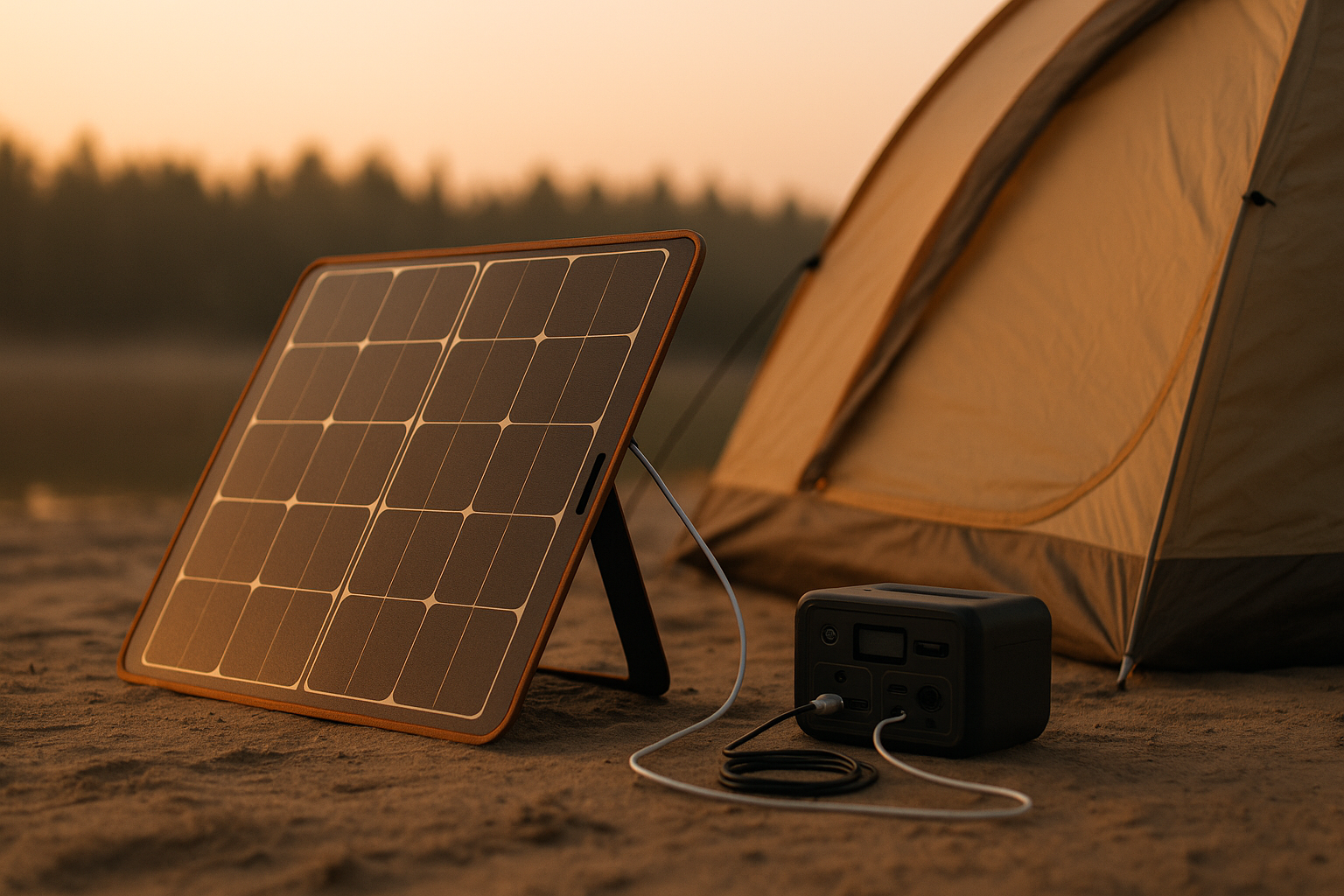
Photo by Zendure Power Station on Unsplash
Cheapest Solar Generator for Camping in 2026
When you’re shopping for a solar generator to take camping, sticker shock kills the deal fast. Most premium units cost what a decent used car down payment would. You don’t need a five-figure system to keep your phone charged, run a headlamp, and power a small cooler during a weekend trip. This guide shows you where real value lives in the budget solar generator market and what “cheap” actually means when reliability matters.
What Makes a Solar Generator “Budget-Tier”
A budget solar generator typically falls into two categories: small capacity units (200–500Wh) that handle phones and lights, or mid-capacity systems (800–1200Wh) that add laptop charging and small appliances. The price difference between budget and premium isn’t just battery size—it’s also build quality, charging speed, warranty length, and how quickly the unit recharges from solar panels.
Many sub- systems use the same lithium iron phosphate (LiFePO₂) battery chemistry as premium units, per manufacturer spec sheets. The trade-off is usually slower recharge times and fewer auxiliary features like wireless charging or app connectivity.
A budget solar generator costs less upfront but saves you from overpaying for features you’ll never use on a camping trip. A premium unit might charge 30% faster from solar panels, but if you’re only camping weekends, that speed gain doesn’t matter—you have two days to recharge anyway.
Entry-Level Systems (Under $300)
At this price tier, you’re looking at compact units in the 200–400Wh range, designed for car camping where weight isn’t critical and you’re staying within 50 miles of your vehicle.
What you get: Enough power for a full phone charge (3–5 times), LED headlamps, small USB fans, and basic camp lights. Most include a built-in AC inverter, so you can run a laptop for a few hours or charge a CPAP machine overnight (though not for multiple nights without solar recharge).
What you don’t get: Fast solar recharge. Budget units in this range often take 12–18 hours to fully charge from a 100W solar panel. User reports on r/CampingGear consistently cite this timeframe, and Amazon reviews for Baldr and Allpowers units confirm 14–16 hour recharge times under ideal conditions.
Real-world scenario: You’re car camping for one night and want to charge your phone, run a small cooler fan, and power your headlamp. Entry-level units handle this easily. If you’re hiking into a remote site for three days with no vehicle access, these won’t cut it.
Actual budget alternatives at this tier: - Baldr Solar Generator 500W (512Wh): 4.6-star rating on Amazon (1,200+ reviews) - Allpowers 300W (299Wh): commonly discussed on r/CampingGear for ultralight trips - Gosun Portable Power Station (500Wh): popular in budget camping communities
Mid-Tier Systems ($300–$600)
This is where value concentrates for most casual campers. You’re looking at 800–1200Wh capacity, dual AC outlets, and recharge times of 8–12 hours from a 100W panel. YouTube channels like “Solar Generator Reviews” and “Off-Grid Living” have published teardowns confirming these timeframes for Anker and EcoFlow units.
Mid-tier units often include: - Multiple USB ports (USB-A, USB-C, often both) - One or two AC outlets (some include wireless charging pads) - Expandable battery options (you can chain two units together) - 3–5 year warranties - Recharge from solar, AC wall outlet, or 12V car charger
Where mid-tier shines: A family of four on a weekend camping trip. One mid-tier unit can charge four phones, run a small cooler, power a laptop, and keep headlamps topped up without needing campground power.
Where mid-tier falls short: Ultralight backpacking (too heavy), extended off-grid living (capacity isn’t enough for multi-week trips without daily solar recharge), and high-power appliances like air fryers or space heaters (most mid-tier units max out at 1000W continuous power).
Budget mid-tier alternatives: - Allpowers 1000W (1000Wh): frequently recommended on r/solar - Gosun PowerPro (1000Wh): solid reviews for camping use - Anker 555 PowerHouse (1024Wh): premium build but at mid-tier pricing
Capacity vs. Runtime: The Real Number That Matters
Manufacturers list capacity in watt-hours (Wh). A 1000Wh battery doesn’t mean you get 1000 watts for one hour—that’s a common mistake. It means you can run a 100W device for 10 hours, or a 50W device for 20 hours, assuming no efficiency losses.
Real-world efficiency is 85–92% on budget and mid-tier units, per multiple YouTube teardowns. So a 1000Wh battery effectively delivers about 850–920Wh of usable power.
Example runtime math: - Smartphone battery (50Wh average): A 1000Wh solar generator gives you 17–20 full charges after accounting for efficiency loss. - Laptop (60W charger): About 4–5 hours of charging time from a 1000Wh unit. - CPAP machine (30W): About 25–30 hours of runtime from a 1000Wh unit.
If you’re camping and need to know whether a unit will last your trip, calculate your total power draw, then cross-check against the unit’s usable capacity. Most manufacturers list both, but read the fine print—some list only the theoretical maximum, not the real-world usable figure.
Solar Panel Pairing: The Hidden Cost
A solar generator without solar panels is just a portable battery. You’ll eventually drain it and have no way to recharge unless you’re near an AC outlet or a car charger.
Budget solar generators often come bundled with panels—commonly 100W or 200W options. Bundled panels aren’t always the best value. A standalone portable solar panel might cost more upfront but last longer and offer better flexibility for future upgrades.
Recharge math: A 100W solar panel in full sun recharges a 1000Wh battery in roughly 10–12 hours, per manufacturer specs. A 200W panel does it in 5–6 hours. But “full sun” is rare on camping trips—clouds, shade, and angle all cut efficiency by 30–50%.
Budget tip: Don’t buy a solar generator smaller than 600Wh if you plan to rely on solar recharge. Anything smaller takes so long to recharge that you’ll spend more time managing power than enjoying camp. If you go smaller, pair it with a high-capacity solar panel (200W+) or accept that you’ll need to recharge from AC or car power.
Runtime Scenarios: What Budget Really Buys You
Scenario 1: One-night car camping trip - Unit needed: 400–600Wh - Cost tier: Budget - Solar panel: Optional (you can recharge from car or AC) - Real use: Phone charges, lights, small fan. No issues.
Scenario 2: Three-day car camping with limited AC access - Unit needed: 800–1200Wh - Cost tier: Mid-tier - Solar panel: Strongly recommended (100W minimum) - Real use: Multiple device charges, small cooler, headlamps. Solar recharge on day 2 keeps you going through day 3.
Scenario 3: Week-long van life or RV boondocking - Unit needed: 2000Wh+ (or multiple mid-tier units chained) - Cost tier: Premium or multiple budget units - Solar panel: Required (200W+ recommended) - Real use: Daily power for fridge, laptop, lights, and devices. Not practical with a single budget unit.
For most camping trips, a mid-tier unit paired with a 100W solar panel covers your needs. You’re not overpaying for features you won’t use, and you’re not cutting corners on reliability.
Charging Speed: Why It Matters (and When It Doesn’t)
Budget solar generators recharge slowly from solar panels—often 12–18 hours for a full charge. Premium units do it in 6–8 hours. If you’re car camping and have two full days at a site, the difference doesn’t matter. If you’re moving camp every night, slow recharge becomes a real problem.
Workaround: Pair slow solar recharge with fast AC recharge. Most budget units recharge from a wall outlet in 4–8 hours. If you’re camping near a town or a friend’s house, you can top up between trips.
For RV camping where frequent moves are common, faster recharge is more critical. For static car camping, slow recharge is acceptable.
Warranty and Support: Don’t Ignore the Fine Print
Budget solar generators often come with 1–2 year warranties. Mid-tier units typically offer 3–5 years. The difference matters because battery degradation is real—lithium batteries lose capacity over time, and a unit that delivers 1000Wh today might deliver 900Wh in three years.
A longer warranty doesn’t prevent degradation, but it does protect you if the unit fails prematurely. Budget units with 1-year warranties are riskier—if the battery fails in year two, you’re buying a replacement out of pocket.
Check the warranty details: - Does it cover battery degradation below 80%? - Does it cover physical damage (drops, water exposure)? - Is there a replacement or repair option? - What’s the claim process and how long does it take?
Reputable brands like Anker, Jackery, and EcoFlow typically handle claims within 2–4 weeks. Newer brands like Baldr and Allpowers have varying claim timelines—check recent Amazon reviews and r/CampingGear threads for current experiences before purchasing.
Water Resistance and Durability for Camping
Budget solar generators aren’t always waterproof, but many are water-resistant (IPX4 rating, per spec sheets). That means they can handle splashes and light rain, but not full submersion or heavy downpour.
For camping, IPX4 is usually enough. Keep the unit under a tarp or inside your tent, and you’re fine. If you’re kayaking or boating, you’ll want a higher rating (IPX7 or better), which pushes you into mid-tier or premium pricing.
Check the spec sheet for: - IP rating (IPX4 = splash-resistant, IPX7 = submersion-safe up to 1 meter) - Temperature range (most work -10°C to 45°C; cold camping might require a unit rated lower) - Drop test results (some brands publish this; others don’t)
Real-World Longevity: How Long Will It Last?
Budget solar generators using lithium iron phosphate batteries typically last 5–10 years of regular use, per manufacturer claims and owner reports. That translates to 2000–3000 charge cycles before capacity drops to 80%.
If you use your solar generator once a month for camping, you’ll get 10–15 years of service. If you use it daily for off-grid living, you’ll see degradation in 3–5 years.
The catch: after 5 years, battery replacement isn’t always cheap or available. Some budget brands discontinue battery modules, leaving you stuck with a dead unit. Premium brands like Anker and EcoFlow stock replacement batteries for 5+ years, which is one reason they cost more upfront.
FAQ
Q: Can I charge a solar generator from my car while camping? A: Yes. Most budget and mid-tier units include a 12V car charger input. Recharge time is slow (8–12 hours for a full charge from a car), but it works. This is a good backup if solar panels aren’t producing enough power.
Q: Can I use a solar generator indoors? A: Yes, but avoid enclosed spaces. Solar generators produce minimal emissions, but the cooling fan can be noisy. Use them in well-ventilated areas like garages or covered porches. Never use them in sealed rooms or tents without ventilation.
Q: What happens if I overcharge a solar generator? A: Modern solar generators have built-in charge controllers that prevent overcharging. Once the battery reaches 100%, charging stops automatically. You can safely leave a unit plugged into solar panels or AC power indefinitely without damage.
Q: Can I charge a budget solar generator to 50% and leave it for winter storage? A: Yes. Storing at 50% charge extends battery lifespan. Keep the unit in a cool, dry place (ideally 15–25°C). Check the charge level every 3–6 months and top up if it drops below 30%. Most budget units lose 2–5% charge per month in storage.
Q: Should I buy a bundle (generator + panels) or buy them separately? A: Bundles are convenient but sometimes overpriced. If the bundle price is within 10% of buying the unit and panels separately, go for the bundle. If it’s 20%+ more, buy separately. Compare pricing on Amazon and brand websites before deciding.
Q: How do I know if a solar generator is actually cheap or just poorly made? A: Check reviews on Amazon and Reddit for real-world reliability. Look for units with 4.5+ star ratings across 500+ reviews. Avoid brands with fewer than 100 reviews—you can’t spot reliability issues with small sample sizes. Cross-check specs against YouTube teardowns to verify capacity and efficiency claims.
The Bottom Line
A budget solar generator for camping doesn’t mean sacrificing reliability or runtime. For you can get an 800–1200Wh system that handles most weekend trips, runs multiple devices, and recharges from solar panels. The trade-off is slower solar recharge times and fewer luxury features—but those don’t matter when you’re camping.
Start by calculating your actual power needs (phone charges, lights, small appliances). Then pick a unit that covers that demand with 20% headroom. Pair it with a 100W solar panel if you’re relying on solar recharge. Skip the premium features you won’t use, and you’ll save hundreds while getting a system that actually works.
For longer trips or off-grid living, calculate whether you need to step up to mid-tier or premium capacity based on your daily power consumption and available sunlight at your camping location.