How Much Battery Backup Do You Need? Wattage Calculator & Guide

How Much Battery Backup Do You Need? Wattage Calculator & Guide
Figuring out the right battery capacity isn’t about guessing—it’s about matching your actual load to realistic runtime. Too small, and you’re dead in the water during a blackout. Too large, and you’ve overspent on capacity you’ll never use. This guide walks you through calculating your exact needs, whether you’re prepping for a week-long outage, powering a campsite, or keeping your home office running.
The Two-Step Method: Wattage × Hours
Battery capacity is measured in watt-hours (Wh) or kilowatt-hours (kWh). The math is simple: Peak Wattage × Runtime Hours = Watt-Hours Needed.
Peak wattage is the maximum power draw when all your devices run simultaneously. Runtime is how long you want the battery to sustain that load.
For example, if you’re running a laptop (100W), a monitor (40W), and a desk lamp (15W), your peak is 155W. If you need 8 hours of backup, you’d want at least 155W × 8h = 1,240 Wh, plus a 20–30% buffer for inverter losses and battery efficiency. That lands you in the 1,500–1,600 Wh range—roughly a mid-tier portable power station.
The catch: most households don’t run everything at once. Refrigerators cycle on and off. Lights turn on and off. Heaters and AC draw massive peak wattage but don’t run continuously. You need to separate continuous load from peak load.
Understanding Continuous vs. Peak Load
Continuous load is what your devices draw while running steadily—a laptop at full brightness, a router, a lamp. This is the number you use for the main calculation.
Peak load is the surge when a motor, compressor, or heating element kicks on. Refrigerators, air conditioners, well pumps, and power tools can pull 2–3× their continuous rating for a few seconds. Battery systems must handle the peak, but you don’t size for it unless the peak runs for hours.
For example: - A refrigerator draws ~600W continuous, but the compressor surge is ~1,200W for 5 seconds when it cycles on. - A microwave oven draws ~1,000W continuous, but its startup peak can hit ~1,200W. - A space heater draws ~1,500W continuously with no surge.
Your battery must handle the peak wattage without shutting down (inverter shutdown = failed backup). But your capacity calculation uses the continuous draw.
Step 1: Audit Your Devices
List every device you want to power during a backup scenario. Use a Kill-A-Watt meter (a cheap plug-in device that reads real-time watts) to measure actual consumption, or cross-reference the device manual or nameplate.
Common device wattages:
| Device | Continuous (W) | Peak (W) | Source |
|---|---|---|---|
| Laptop (typical) | 50–100 | 120–150 | Per manufacturer specs |
| Desktop computer | 150–300 | 400–600 | Per manufacturer specs |
| Monitor (LED, 27”) | 30–50 | 60–80 | Per manufacturer specs |
| Wi-Fi router | 10–15 | 20–30 | Per manufacturer specs |
| Modem | 5–10 | 15–20 | Per manufacturer specs |
| LED desk lamp | 10–15 | 20–25 | Per manufacturer specs |
| Refrigerator | 400–800 (cycling) | 1,000–2,000 (compressor) | Per manufacturer specs |
| Space heater | 750–1,500 | 1,500–2,000 | Per manufacturer specs |
| Microwave | 800–1,200 | 1,200–1,500 | Per manufacturer specs |
| Toaster | 800–1,500 | 1,500–2,000 | Per manufacturer specs |
| Electric kettle | 1,500–2,500 | 2,000–3,000 | Per manufacturer specs |
| Window AC unit | 500–1,500 | 1,500–2,500 | Per manufacturer specs |
| Well pump | 500–2,000 | 2,000–4,000 | Per manufacturer specs |
| Sump pump | 700–2,000 | 2,000–4,000 | Per manufacturer specs |
Real-world draws vary by model age and efficiency rating. Cross-reference your specific devices with their manuals for accuracy.
Step 2: Choose Your Scenario and Runtime
Define why you need backup:
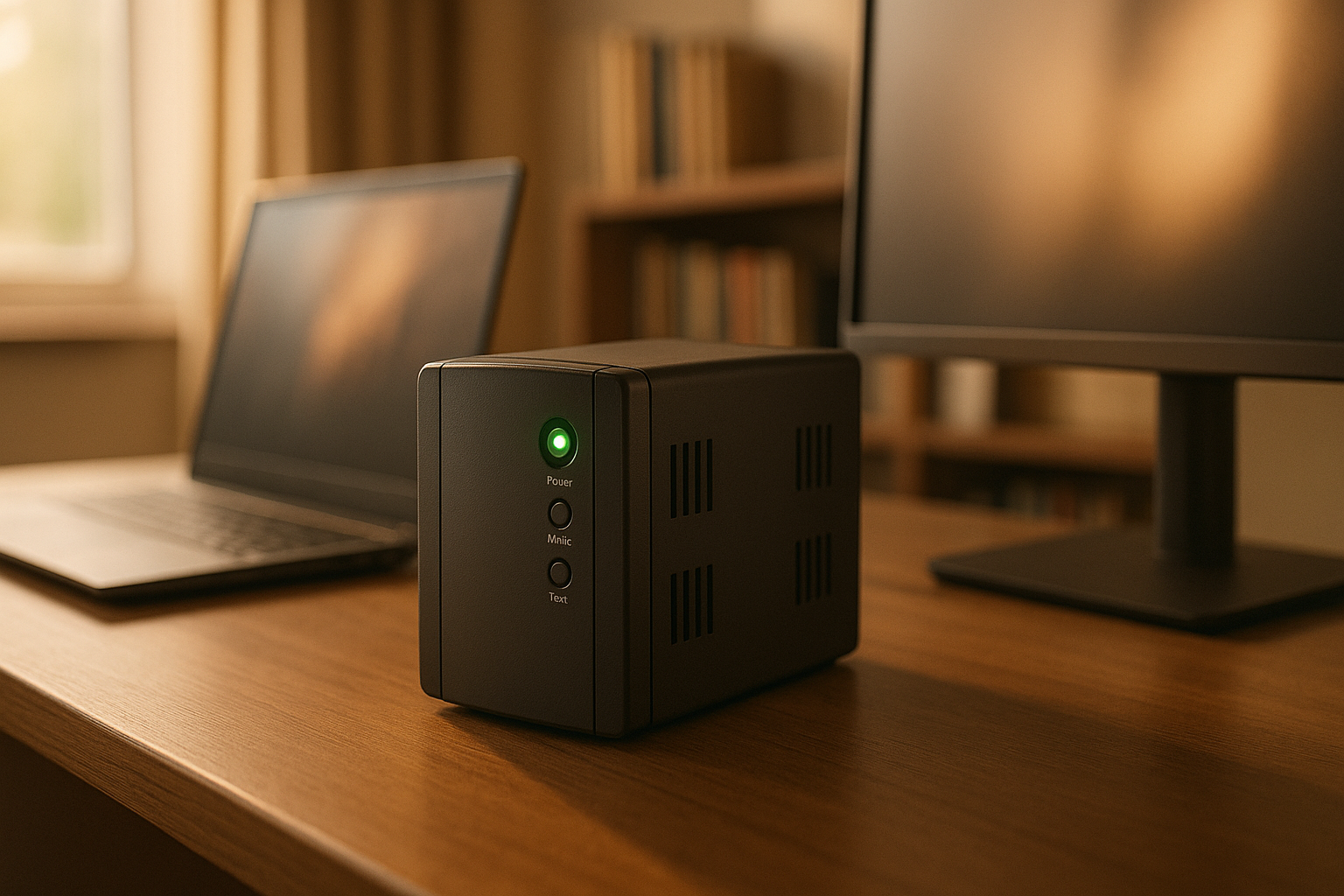
- Home office outage (4–12 hours): Laptop, monitor, router, phone charger, lights.
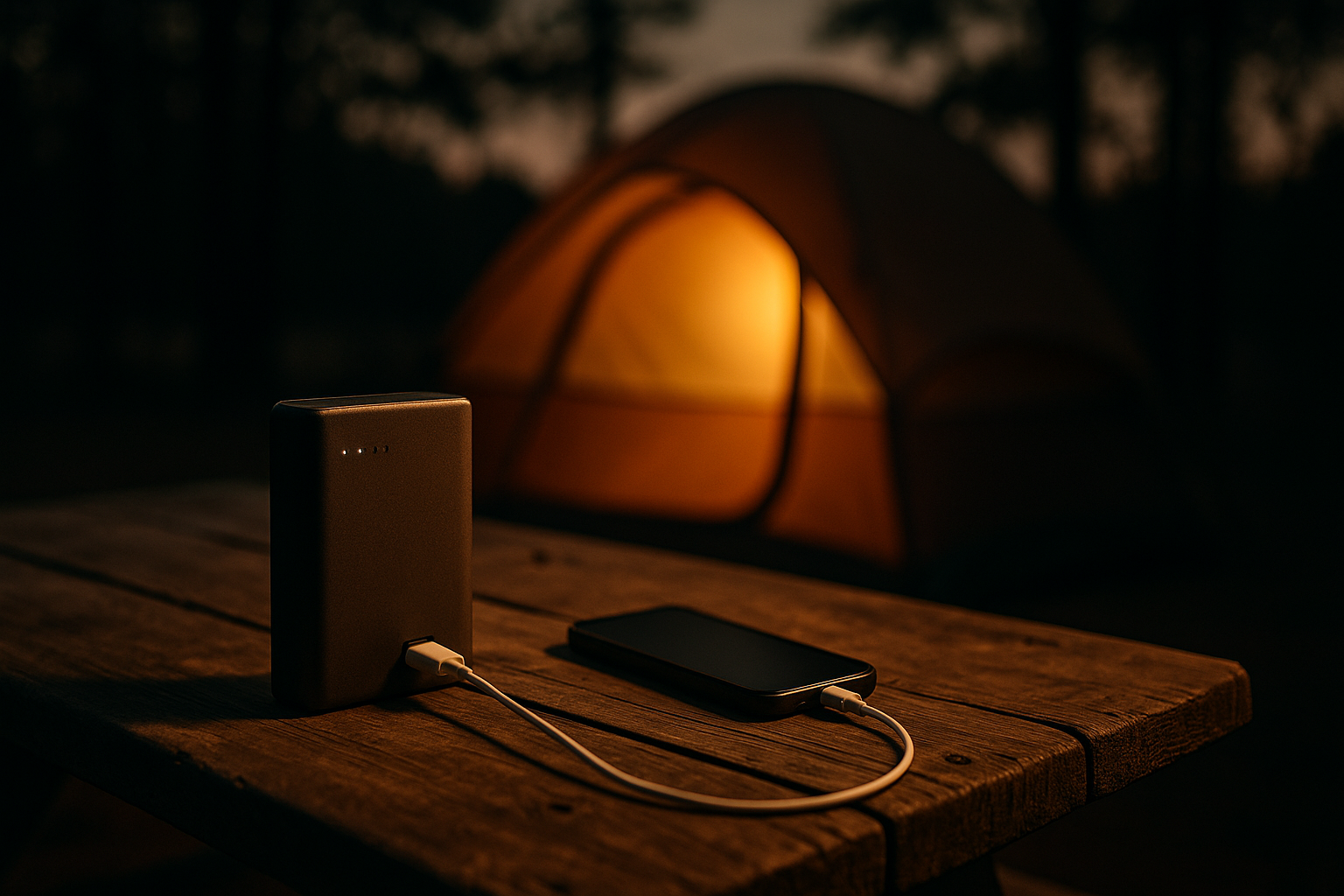
- Weekend camping (2–3 days): Phones, lights, small fridge, fan, coffee maker.
- Whole-home standby (24+ hours): Refrigerator, well pump, essential lighting, furnace blower, medical equipment.
- RV or van (continuous): Fridge, inverter loads, water pump, lighting, USB charging.
For multi-day scenarios (outages, camping), also factor in solar recharge time. A 2,000 Wh battery drained to 50% takes roughly 4–6 hours to recharge from a 200W solar panel in good sun. If you’re camping for 3 days, you may need less battery capacity if you can recharge during daylight.
Step 3: Calculate Total Watt-Hours
Use this formula:
Watt-Hours = (Sum of Continuous Wattages) × (Runtime Hours) × 1.25
The 1.25 multiplier accounts for: - Inverter losses (5–10% of power dissipates as heat). - Battery efficiency curves (lithium batteries are ~90–95% efficient; lead-acid ~80%). - Reserve capacity (don’t drain batteries to 0%—it shortens lifespan).
Example: Home office backup - Laptop: 100W - Monitor: 40W - Router: 12W - Lights (3 × LED): 30W - Phone charger: 5W - Total continuous: 187W - Desired runtime: 8 hours - Calculation: 187W × 8h × 1.25 = 1,870 Wh - Target battery: 2,000–2,500 Wh (to be safe)
Example: Weekend camping - Portable fridge: 50W (cycling, average) - LED lights (2): 20W - Phone chargers (2): 10W - Portable fan: 30W - Coffee maker (1 hour use): 1,000W × 1h = 1,000 Wh - Total for 2 days (48 hours) of light use: roughly 200W avg × 48h = 9,600 Wh - But with solar recharge during day: 1,500–2,000 Wh suffices if you recharge 4–6 hours midday
Accounting for Peak Loads and Motor Surge
If your scenario includes devices with high peak wattage—refrigerators, AC units, well pumps, power tools—your battery’s inverter must handle the surge, even if the surge only lasts seconds.
Most portable power stations list two specs: - Continuous output: e.g., 1,000W - Peak output: e.g., 2,000W for 10 seconds
For example, the Jackery Explorer 1000 delivers 1,000W continuous and 2,000W peak, allowing it to start a refrigerator compressor (1,200W surge) without shutting down, while the continuous rating limits sustained loads to 1,000W.
A refrigerator with a 1,200W compressor surge needs an inverter rated for at least 1,200W peak. If your inverter is only 1,000W peak, it will shut down when the compressor kicks on—and your backup fails.
For whole-home backup with large motors (AC, well pump, furnace blower), you often need a battery system rated for 5,000–8,000W peak. This is why portable power stations (typically 2,000–3,000W) aren’t suitable for full-home standby; you need a hard-wired battery bank or hybrid inverter system.
Scenario-Based Capacity Recommendations
Home Office or Light Home Use (4–12 hours)
- Target: 1,000–2,500 Wh
- Covers laptop, monitor, router, lights, phone charging.
- Peak wattage: 200–400W.
- Inverter requirement: 500W continuous, 1,000W peak.
- Suitable: Mid-tier portable power station or UPS system.
Weekend Camping or RV (2–3 days, with solar recharge)
- Target: 1,500–3,000 Wh (if recharging midday via solar)
- Target: 5,000+ Wh (if no recharge expected)
- Covers fridge, lights, fans, phone/laptop charging, coffee maker.
- Peak wattage: 300–1,000W.
- Inverter requirement: 1,000W continuous, 2,000W peak.
- Suitable: Portable power station + portable solar panels.
Multi-Day Outage or Off-Grid Living (3+ days, no grid recharge)
- Target: 10,000–30,000 Wh
- Covers refrigerator, well pump (if applicable), furnace blower, essential lighting, medical devices.
- Peak wattage: 2,000–4,000W (accounting for compressors and motors).
- Inverter requirement: 3,000–5,000W continuous, 6,000–8,000W peak.
- Suitable: Hard-wired battery bank (LiFePO₄ or lead-acid) with hybrid inverter-charger, or stacked portable power stations.
Whole-Home Standby (24+ hours, all appliances)
- Target: 20,000–50,000+ Wh
- Covers everything: HVAC, water heating, kitchen appliances, laundry, medical equipment.
- Peak wattage: 5,000–10,000W.
- Inverter requirement: 5,000–10,000W continuous, 10,000–15,000W peak.
- Suitable: Home battery system (Tesla Powerwall, LG Chem, Generac PWRcell) or multiple stacked portable stations with generator backup.
Factoring in Solar Recharge
If you’re pairing your battery with solar panels, you can reduce upfront battery capacity—the sun recharges during the day.
A 200W solar panel in full sun (peak hours: roughly 4–6 hours per day in most climates) generates approximately 1 kWh per day, per manufacturer specs. A 2,000 Wh battery drained to 50% (1,000 Wh used) recharges in roughly 1 day of good sun.
Solar-paired strategy: - Size your battery for 1–2 days of autonomy (no sun). - Recharge during daylight via solar. - This works well for RVs, camping, and off-grid homes with predictable weather. - In cloudy climates or winter, solar output drops 30–50%; factor this in.
Common Mistakes When Sizing Battery Backup
Oversizing for peak wattage. A refrigerator’s 1,200W compressor surge lasts 5 seconds. Don’t size your battery for 1,200W continuous—size for the actual continuous draw (~600W) and ensure your inverter handles the 1,200W peak. This mistake triples your battery cost unnecessarily.
Ignoring cycling loads. Refrigerators, furnaces, and well pumps don’t run continuously. Calculate their average draw over 24 hours, not their peak. A fridge running 8 hours per day at 600W continuous is ~200W average.
Forgetting the 20–30% buffer. Inverter losses, battery efficiency, and the need to avoid deep discharge all mean you should add 20–30% to your calculated Wh. A 2,000 Wh target should buy you 2,400–2,500 Wh actual capacity.
Underestimating heating and cooling. Space heaters and window AC units are power hogs (1,500–2,500W continuous). If backup power for heating or cooling is a priority, you need either a very large battery or a fuel-based generator backup. Most portable power stations can’t sustain these loads for more than 1–2 hours.
Assuming 24/7 runtime without recharge. Based on outage data from the U.S. Energy Information Administration, a typical outage lasts 4–12 hours. A 3-day outage is rare outside disaster zones. If you’re not in a high-risk area, a 2,000–3,000 Wh battery covers 90% of real-world scenarios.
Comparing Battery Types for Different Needs
Lithium (LiFePO₄) is the modern standard for portable power stations. Per manufacturer warranty data and owner reviews, LiFePO₄ systems offer: - 3,000–5,000 cycle lifespan (10–15 years of daily use). - 90–95% round-trip efficiency. - Fast charging (80% in 1–2 hours). - Lightweight and compact. - Higher upfront cost.
Lead-acid (flooded or AGM) is cheaper upfront but heavier and less efficient. Per manufacturer warranty data: - 500–1,000 cycle lifespan (3–5 years of regular use). - 80–85% round-trip efficiency. - Slower charging. - Bulky and heavy (200+ lbs for equivalent capacity). - Lower cost per Wh.
For portable backup, camping, or RV use: Lithium wins on weight and convenience. For stationary whole-home backup with budget constraints: Lead-acid is viable if you have space and accept shorter lifespan.
Tools and Resources for Sizing
Online wattage calculators (search “portable power station calculator”) let you input devices and runtime, and they output Wh recommendations. These are helpful sanity checks, though they often overestimate by 10–20%.
Kill-A-Watt meters (budget-tier, widely available) plug into outlets and display real-time watts, amps, and kWh. Measure your actual devices for 24 hours to get true average consumption.
Device manuals and spec sheets list watts or kilowatts for each appliance. Cross-reference your specific models for the most accurate numbers.