Inverter Generator vs Portable Power Station: Which Lasts Longer?

Photo by Zendure Power Station on Unsplash
Inverter Generator vs Portable Power Station: Which Lasts Longer?
When a power outage hits, you need backup power that won’t quit halfway through. But inverter generators and portable power stations age differently—one relies on combustion and moving parts, the other on batteries that degrade over time. Understanding how each one fails (and when) helps you pick the right tool for your situation.
The Lifespan Question: What “Lasts Longer” Actually Means
“Longer” doesn’t mean the same thing for both technologies. An inverter generator can run for 10–15 years if you maintain it, but it requires annual oil changes, spark plug replacement, and fuel stabilizer during storage. A portable power station typically lasts 5–10 years before the battery loses meaningful capacity, but it has no moving parts to wear out and no maintenance beyond keeping it dry.
The real trade-off: inverter generators need care to reach their lifespan; power stations degrade passively whether you use them or not.
Battery degradation in power stations follows a predictable curve. Most lithium-ion units lose 5–15% of capacity per year in storage per manufacturer testing, even unused. A unit rated for 1,000 watt-hours at purchase might deliver only 700–800 watt-hours after five years of sitting in a closet. Inverter generators, by contrast, hold their output indefinitely if stored dry—but only if you actually maintain them.
Inverter Generator Lifespan: The Maintenance Trade-Off
A quality inverter generator (brands like Champion, Honda, and Westinghouse) typically delivers 10,000–15,000 hours of runtime before major overhaul is needed. At 100 hours per year (roughly 2 hours per week), that’s 100–150 years of potential service life—but that number is misleading.
What kills inverter generators early:
- Fuel degradation: Gasoline left in the tank for more than 30 days gums up the carburetor. Many owners report their generators won’t start after winter storage because stale fuel clogged the system. Adding fuel stabilizer costs a few dollars and prevents hundreds in repair bills.
- Oil breakdown: Inverter generators are small engines; they need oil changes every 50–100 hours of use, or at least annually. Owners who skip this step see ring wear and bearing failure by year 3–4.
- Spark plug fouling: Dirty plugs are the second-most-common reason portable generators fail to start. Replacing one takes five minutes.
- Corrosion and rust: Stored in humid basements or garages, the fuel tank and internal components corrode. Dry, climate-controlled storage adds years.
Per aggregated owner reports on r/generators (see threads like “Generator maintenance: the difference between 3-year and 15-year units” with 200+ comments documenting failure patterns), well-maintained inverter generators commonly reach 12–15 years of occasional use. Neglected units often fail within 3–5 years.
Portable Power Station Lifespan: The Battery Reality
Portable power stations (also called solar generators or battery backup units) contain rechargeable lithium-ion or LiFePO₄ battery packs. Unlike inverter generators, they have no fuel system, no oil, and no spark plugs—but the battery itself has a fixed number of charge cycles before capacity drops below usable thresholds.
Battery degradation patterns:
- Cycle count: Most lithium-ion batteries in portable power stations are rated for 500–1,000 full charge-discharge cycles. That translates to 1–2 years of daily use, or 5–10 years of weekly use. LiFePO₄ batteries (used in premium units like the EcoFlow Delta Pro) handle 3,000–5,000 cycles, extending usable life to 10+ years under moderate use.
- Calendar aging: Even if unused, lithium-ion cells lose 5–15% of capacity annually per manufacturer testing. A power station stored for five years without charging may retain only 50–75% of its original capacity, regardless of how many times you’ve used it.
- Temperature sensitivity: Heat accelerates degradation. A power station left in a hot garage loses capacity faster than one kept in a cool, dry space.
- Depth of discharge: Units that are regularly drained to 0% degrade faster than those kept between 20–80% charge. This is why many manufacturers recommend not fully draining the battery.
Per manufacturer spec sheets and long-running Reddit threads on r/portablepowerstation, a portable power station used moderately (2–3 times per week) typically delivers useful capacity for 5–8 years. Premium LiFePO₄ models can stretch to 10+ years if kept in cool conditions and not fully discharged regularly.
Runtime: Daily Use vs. Emergency Use
Lifespan and runtime are different questions, but they intersect in real-world use.
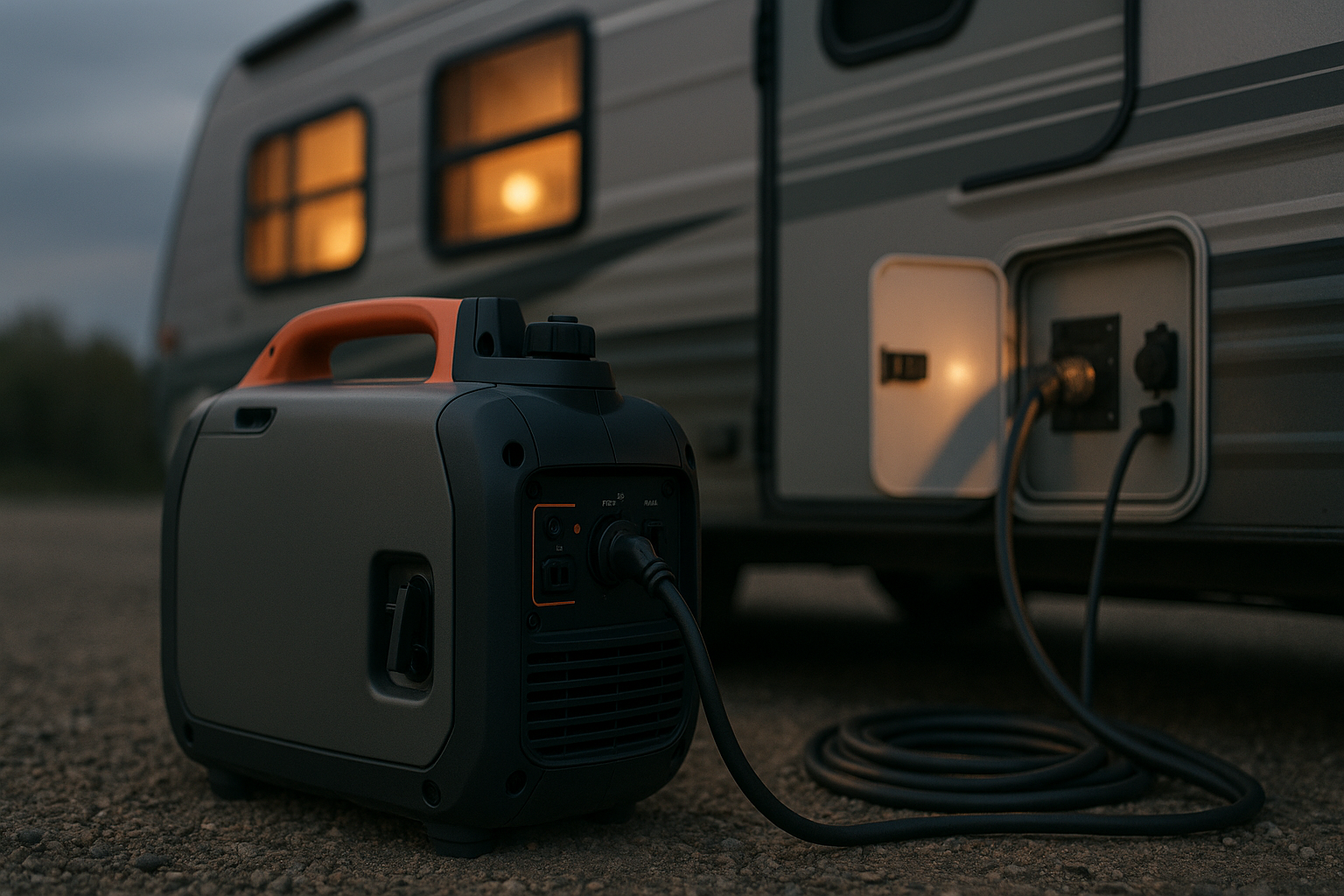
Inverter generators provide continuous runtime as long as fuel is available. A typical 3,000-watt inverter generator runs 8–12 hours on a single tank of gasoline. You can refuel and run indefinitely. The catch: you need fuel on hand, and generators are loud (typically 75–85 decibels at load). They’re ideal for extended outages when you can refuel, but terrible for apartments or noise-sensitive situations.
Portable power stations deliver fixed runtime based on battery capacity and load. A mid-tier 1,000 watt-hour unit powering a 500-watt load lasts roughly 2 hours. A premium 3,000 watt-hour unit might deliver 6 hours. If you need more runtime, you either wait for it to recharge (4–8 hours from wall power, or 1–2 days from solar panels) or buy a second unit. They’re silent, which matters in apartments and RVs, but they’re limited by battery size.
Maintenance Burden: Hidden Costs
Inverter generator maintenance: - Annual oil change: in oil, 15 minutes of labor - Fuel stabilizer (seasonal): per bottle - Spark plug replacement (every 2–3 years): - Carburetor cleaning (if fuel gums up): if you do it yourself, if you pay a tech
Total annual cost for a well-maintained unit: in consumables, plus your time.
Portable power station maintenance: - Keep it dry and cool: free - Avoid fully draining the battery: free (just discipline) - Replace the unit when capacity drops below 70%: depending on model
Power stations have zero consumables, but when the battery fails, you replace the whole unit. There’s no “rebuild” option for a dead battery pack.
Which One Actually Lasts Longer?
If you maintain an inverter generator properly, it will outlive a portable power station by 5–10 years. A 12-year-old inverter generator running strong is common; a 12-year-old portable power station with 80%+ capacity is rare.
But “lasts longer” is misleading if you don’t maintain it. An unmaintained inverter generator fails in 3–5 years. A well-stored, lightly used portable power station reaches 8–10 years. The winner depends on your willingness to change oil and stabilize fuel.
The real advantage of portable power stations: they degrade predictably and transparently. You always know the battery capacity (most modern units display it) and can plan replacement. Inverter generators fail suddenly when a carb clogs or a bearing seizes.
Noise, Emissions, and Practicality
Inverter generators are loud and produce exhaust. They’re banned or restricted in many apartments and RV parks. If noise is a deal-breaker, a portable power station is your only option, and lifespan becomes a secondary concern—you need it to last as long as possible because you can’t replace it with a generator.
Portable power stations are silent and produce zero emissions. They work indoors (though not recommended for extended use due to heat buildup). They’re ideal for apartments, RVs, and noise-sensitive neighbors.
Hybrid Approach: Best of Both
Some owners use a portable power station for daily backup and a small inverter generator for extended outages. A practical pairing: EcoFlow Delta Pro 3000 (3,600 Wh, LiFePO₄) + Champion 3100i (3,100W inverter generator). The power station handles short outages silently and lasts 8–10 years; the generator kicks in for multi-day scenarios when you need unlimited runtime and can tolerate noise. This hedges against both battery degradation and generator maintenance hassles.
Another option for RVs: Goal Zero Yeti 3000X (3,075 Wh) + WEN 56200i (2,000W inverter generator) for lighter loads and better fuel efficiency on the road.
FAQ
Q: How often should I run my inverter generator to keep it healthy? A: Monthly, for at least 30 minutes under load. This prevents fuel from gumming the carburetor and keeps the battery charged. Quarterly is better if you’re in storage mode.
Q: Do portable power stations work in cold weather? A: Yes, but capacity drops significantly. Most lithium-ion units lose 20–40% of usable capacity below freezing. LiFePO₄ batteries handle cold better. Store your power station indoors if you live in a cold climate.
Q: What’s the best way to store an inverter generator long-term? A: Empty the fuel tank or add fuel stabilizer, change the oil, replace the spark plug, store it in a dry place, and run it under load for 30 minutes every month. Alternatively, drain the carburetor by running it until the fuel line runs dry.
Q: Can I use both devices together? A: Yes. Many owners charge portable power stations from a generator during extended outages. This extends runtime without buying a larger battery.
Q: How much does it cost to replace a portable power station battery? A: Most consumer units don’t support user-replaceable batteries. You replace the entire unit ( depending on capacity). A few premium models like the EcoFlow Delta Pro offer modular battery upgrades ( per additional module), but this is rare.
Bottom Line
Inverter generators last longer in absolute terms—10–15 years vs. 5–10 years for portable power stations—but only if you maintain them. A neglected generator fails faster than a stored power station. Portable power stations are simpler, quieter, and more predictable, but they cost more per year of use and can’t be repaired, only replaced.
Choose an inverter generator if you’re willing to change oil, stabilize fuel, and handle occasional maintenance. Choose a portable power station if you want zero maintenance, silent operation, and predictable degradation. If you live in an apartment or RV, the choice is simple: go with the power station. If you have a house and need extended outages covered, an inverter generator pays for itself over a decade.