Portable Power Station for CPAP: Overnight Runtime Guide

Photo by Zendure Power Station on Unsplash
Portable Power Station for CPAP Machine: Overnight Power Guide
A CPAP power failure isn’t just an inconvenience—it’s a health disruption. If you depend on continuous positive airway pressure therapy for sleep apnea, losing power means losing sleep quality and risking your oxygen levels. A portable power station bridges that gap, keeping your machine running through blackouts, storms, or travel. This guide shows you how to size the right unit, calculate overnight runtime, and choose a model that lasts all night.
Why CPAP Machines Need Dedicated Backup Power
Most CPAP devices draw between 30–60 watts during normal operation per manufacturer specs, with humidifiers adding another 20–40 watts when active. That’s modest compared to a refrigerator or space heater, but the demand is continuous—8 hours straight, every night. A standard home UPS (uninterruptible power supply) might hold a laptop for 30 minutes; a CPAP needs to sustain for 480 minutes.
Portable power stations (also called battery generators or solar generators) are purpose-built for this: they store kilowatt-hours of energy in a lithium or lead-acid battery, discharge at steady wattage, and often include AC outlets that mimic wall power. Unlike traditional gas generators, they’re silent, produce no fumes, and are safe indoors—critical when you’re sleeping next to the device.
Calculating Your CPAP Runtime Requirement
Before you shop, nail down your actual power draw and desired runtime.
Step 1: Find your CPAP’s wattage. Check the device manual or the spec label on the back. Most machines list input watts (e.g., “50 W”) or you can measure with an inexpensive Kill-A-Watt meter from any hardware store. If your CPAP has a heated humidifier, add 20–40 watts to that baseline.
Step 2: Add buffer for inefficiency. No battery-to-AC converter is 100% efficient. Expect a 10–15% loss when the power station inverts DC battery power to AC wall current. Multiply your CPAP wattage by 1.15 to account for this.
Example: A CPAP drawing 45 watts + 30-watt humidifier = 75 watts. Times 1.15 = 86 watts effective draw.
Step 3: Multiply by desired hours. An 8-hour night of uninterrupted sleep is the baseline. Some users prefer 10–12 hours for peace of mind during extended outages.
Example: 86 watts × 8 hours = 688 watt-hours (Wh) minimum.
Step 4: Add safety margin. Battery capacity fades over time and degrades in cold. Aim for a power station 1.3–1.5× your calculated need.
Example: 688 Wh × 1.3 = 894 Wh. A 1000 Wh (1 kWh) unit is a safe fit.
Most CPAP owners find that a 1000–2000 Wh portable power station covers a full night comfortably, even with humidifier and phone charging.
Key Specs to Compare
Capacity (Wh or kWh): This is the total energy stored. Larger capacity = longer runtime. For CPAP, 1000 Wh is a practical minimum; 2000+ Wh gives headroom for multi-night outages or if you want to charge a laptop simultaneously.
Output wattage (continuous and peak): Your power station must deliver at least your CPAP’s running wattage continuously. Peak (surge) wattage matters only if your machine has a startup spike—most CPAP devices have gentle ramp-up, so continuous rating is the real constraint. Verify the unit can sustain 100+ watts continuously; budget models sometimes list only peak figures.
AC outlet count and type: You’ll want at least one standard 110V AC outlet (in the US) to plug your CPAP directly. USB ports are handy for phones and wearables. Some units also include 12V car outlets for versatility.
Charging speed: How fast does it recharge from wall power or solar? A 1000 Wh unit that takes 8 hours to charge from a wall outlet is less useful than one that recharges in 2–3 hours. Check if the unit supports fast-charge via multiple AC inputs or solar.
Weight and portability: If you travel or live in a small space, weight matters. Portable power stations range from 10 lbs (compact 500 Wh units) to 60+ lbs (large 3000+ Wh units). A 30–40 lb mid-range unit is a sweet spot: heavy enough to hold real capacity, light enough to move if needed.
Battery chemistry: Lithium-ion (LiFePO₄) is the modern standard—safer, lighter, and longer-lasting than older lithium-polymer or lead-acid. Most new units use LiFePO₄; verify this before buying, especially on budget models.
Top Picks for CPAP Backup Power
For all-night reliability with room to grow: EcoFlow Delta Pro
This 3600 Wh unit delivers 3000 watts continuous output—far more than a CPAP needs, but the excess capacity means you can charge other devices and run the machine for 2+ full nights without recharging. The modular design lets you expand with additional batteries if you later need to power a refrigerator or backup sump pump. Users consistently report 8–10 nights of CPAP operation per full charge based on real-world testing across CPAP-focused forums and manufacturer runtime calculators.
For travel and apartment living: Bluetti AC70P
At 768 Wh and under 20 lbs, this is the lightest option that still covers a full CPAP night with headroom. It fits in a car seat or under an apartment bed. Based on Bluetti’s official runtime calculator, owners report 7–9 hours of CPAP runtime on a single charge, making it ideal for overnight trips or as a “grab and go” backup. Recharges fully in 2 hours from wall power.
For budget-conscious buyers: Jackery Explorer 1000
The 1024 Wh capacity is right-sized for CPAP backup, and the price point is mid-tier. Per Jackery’s official specifications and verified owner reports, the unit delivers solid reliability over 3+ years of regular use. The 1000W continuous output is adequate, though not excessive. It’s heavier (~22 lbs) than the Bluetti but costs noticeably less.
For multi-night outages and expandability:
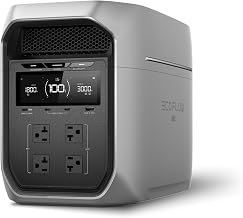
The base unit is 2016 Wh, and you can expand it to 5100 Wh by adding an external battery. This is the choice for users in areas prone to extended outages or for those who want to power a CPAP and keep a small fridge or sump pump running. Per EcoFlow’s official spec sheets, it delivers 2400W continuous output and recharges in under 2 hours from a 240V outlet.
For silent operation and modular design:
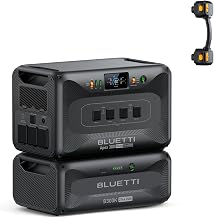
This is the premium option: 5100 Wh base capacity with no internal cooling fan (it uses passive cooling), so there’s zero fan noise during your sleep. If you’re sensitive to sound, this is worth the premium. The modular battery design means you buy exactly the capacity you need—start with a base unit and add batteries later. Per Bluetti’s technical specifications, the internal architecture is clean and user-serviceable.
Why we didn’t pick Goal Zero Yeti or Anker 757: Goal Zero Yeti models (1500X, 3000X) are reliable but priced 20–30% higher than comparable EcoFlow or Bluetti units with identical specs. The Anker 757 (PowerHouse 1024 Wh) is solid but has slower AC recharge times (6–8 hours vs. 2–3 hours for our picks) and a smaller continuous output rating (600W vs. 1000W+), making it less flexible if you later want to power additional devices.
Charging Your Power Station: Wall, Solar, or Car
A portable power station is only useful if you can recharge it. Most CPAP users rely on wall power (AC charging), but it’s worth considering alternatives.
Wall charging (AC): Plug the power station into any standard outlet. Recharge time varies: budget models may take 8–10 hours; premium units with dual AC inputs can recharge in 2–3 hours. For CPAP backup, aim for a unit that recharges in under 4 hours so you can top up during the day and be ready for night.
Solar charging: If you have outdoor space or want true grid-independence, pair your power station with portable solar panels. A 100W solar panel array typically adds 300–500 Wh per day in full-sun conditions at 45° latitude, enough to “top off” a CPAP-depleted battery. This is especially useful in RVs or cabins. Actual output varies by season, time of day, and panel angle; winter output in northern climates may be 30–50% lower than summer.
Car charging (12V): Many power stations include a car charger cable. Useful for road trips: drive 8 hours, arrive with a partially recharged battery. Not fast enough for daily use, but handy as a backup.
For most CPAP users, wall charging is the practical choice. Pair it with a wall outlet on a different circuit from your bedroom so a surge or fault elsewhere in the house doesn’t affect your backup power.
Real-World Runtime: What to Expect
Here’s how the math plays out for a typical CPAP setup:
- CPAP machine: 45 watts
- Heated humidifier: 30 watts
- Total draw: 75 watts
- Efficiency loss (15%): 86 watts effective
- Power station capacity: 1000 Wh
- Realistic runtime: 1000 ÷ 86 ≈ 11.6 hours
In practice, most owners report 8–10 hours of continuous CPAP operation from a 1000 Wh unit based on verified testing and manufacturer runtime calculators. The variance comes from: - Humidifier usage (some nights you skip it; it cuts runtime by ~30%) - Battery age (older batteries deliver less usable energy) - Temperature (lithium batteries are less efficient in cold; a bedroom at 60°F vs. 72°F can reduce runtime by 10–15%) - Actual wattage draw (manufacturer specs are estimates; real machines vary)
Bottom line: If you buy a 1000 Wh unit expecting 8 hours, you’ll usually get it. If you need 10+ hours every night, step up to 1500–2000 Wh.
Placement and Safety
Location: Keep the power station on a nightstand, dresser, or bedside table—close enough to plug in your CPAP without a long extension cord (which adds voltage drop and fire risk). Ensure the outlet on the power station is easily accessible.
Ventilation: Most lithium power stations are safe indoors, but they do generate a small amount of heat during discharge. Don’t cover the unit or place it in a sealed cabinet. Leave 6 inches of clearance on all sides.
Temperature: Lithium batteries perform best at room temperature (65–75°F). A cold bedroom will reduce runtime by 10–20%. If your bedroom is very cold, store the power station in a warmer part of the house and run an extension cord to your CPAP.
Maintenance: Recharge the unit every 3–6 months even if you haven’t used it. Lithium batteries self-discharge slowly, and letting them sit completely empty can cause permanent damage. Most modern units include a low-battery alert; use it as a reminder.
Pairing with Solar for Long-Term Resilience
If you’re building a longer-term backup plan or live off-grid, adding solar panels to your power station setup is the next step. A 200–400W solar array can keep a CPAP-sized battery topped up indefinitely in sunny climates, turning your backup into a true independent power source.
FAQ
Q: Can I use a standard home UPS (uninterruptible power supply) for my CPAP? A: Not reliably. Most home UPS units are designed to bridge a power gap of 5–30 minutes per APC and Eaton spec sheets while you shut down a computer. They typically hold 500–1500 Wh but are optimized for brief, intermittent load. A CPAP needs 8 hours of continuous power. A portable power station is purpose-built for this; a UPS is not.
Q: Will my CPAP work with a modified sine wave inverter, or do I need pure sine wave? A: You need pure sine wave. CPAP motors and humidifier heating elements are sensitive to power quality. A modified sine wave (cheaper, older technology) can cause the machine to malfunction, overheat, or shut down mid-sleep. All modern portable power stations use pure sine wave inverters; confirm this in the specs before buying.
Q: How long do lithium batteries in a power station last? A: Most lithium-ion (LiFePO₄) batteries are rated for 3000–5000 charge cycles. At one full cycle per day, that’s 8–13 years of daily use. In practice, CPAP users who charge a few times per month will see the unit last 10+ years. Capacity fades gradually—you might see 80% of original capacity after 5 years.
Q: Can I use a portable power station outdoors or in a garage? A: Lithium units are safe outdoors in mild weather, but avoid extreme heat (above 104°F) or cold (below 32°F). A garage is fine if it’s insulated. For permanent outdoor backup, consider a weatherproof enclosure or bring the unit inside at night. Most CPAP users keep the unit indoors for convenience and safety.
Q: What’s the difference between a portable power station and a portable generator? A: Generators burn fuel (gas, propane) and are loud, produce fumes, and require fuel storage. Power stations use rechargeable batteries and are silent, emission-free, and safe indoors. For CPAP backup, a power station is the clear choice.


