Emergency Power Outage Supplies: Complete 2026 Shopping List

Photo by Mathurin NAPOLY / matnapo on Unsplash
Emergency Power Outage Supplies: Complete Shopping List for 2026
Most households wait until a storm warning hits the news before thinking about power outage readiness—by then, store shelves are picked clean. This guide organizes backup power, lighting, water, food, and communication gear by realistic use case and duration, so you can build a kit that actually works when the grid fails—not scramble in the dark.
What You’ll Actually Use During an Outage
Power outages last anywhere from a few hours to several days, depending on the cause. Your supply priorities shift based on duration and season. A summer afternoon blackout is manageable without backup power; a three-day winter outage is a survival situation. The supplies below cover both scenarios without assuming you’ll build a bunker.
The core categories are: backup power, lighting, water and food, warmth or cooling, and communication. Overlap is fine—a portable power station handles both charging and device lighting—but redundancy in critical areas (light, heat, water) keeps you safe if one system fails.
Backup Power: Portable Stations vs. Generators
Your backup power choice depends on your home size, budget, and whether you rent or own.
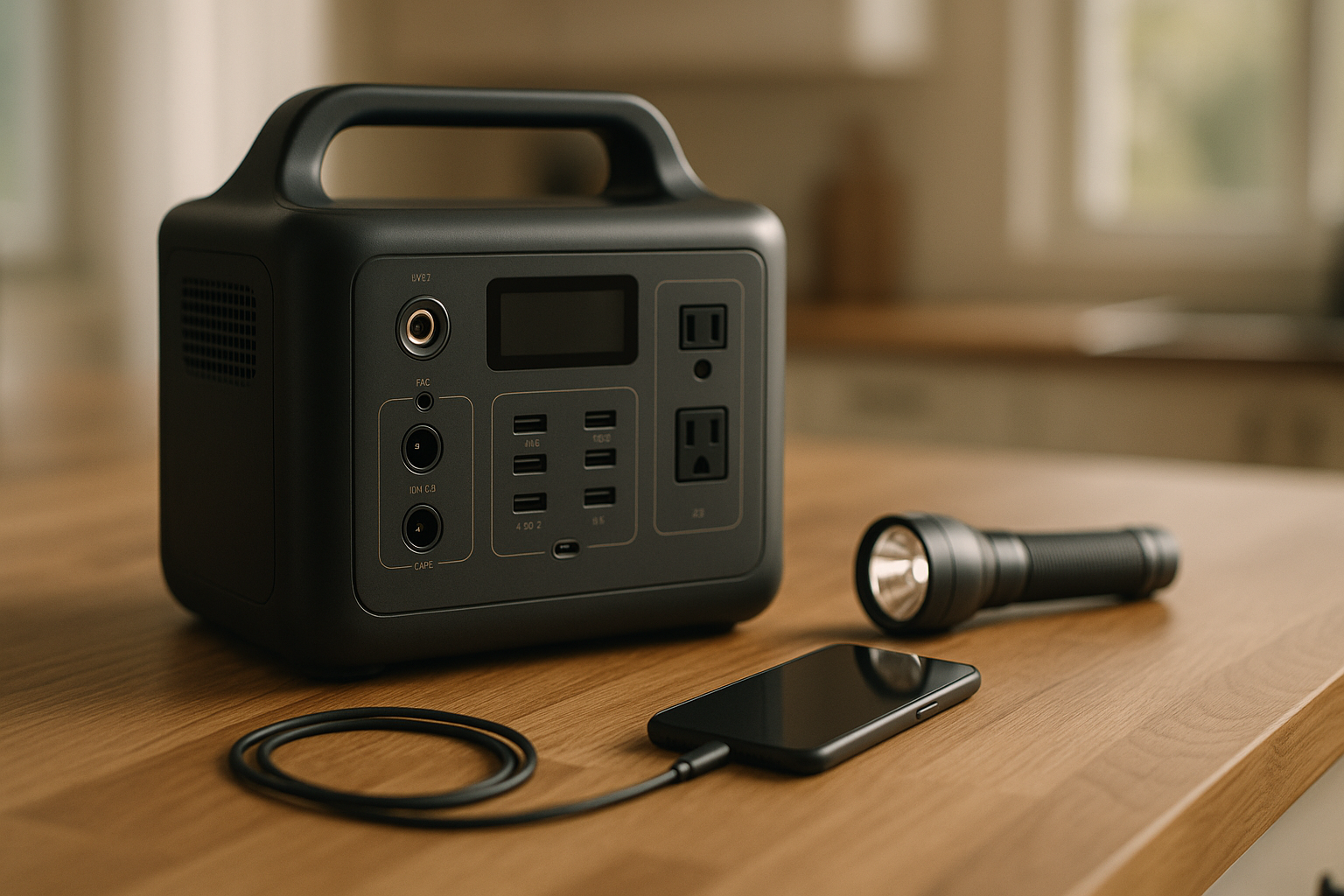
Portable power stations (lithium or LiFePO₄ battery packs) are silent, require no fuel storage, and work indoors. They’re ideal for apartments, small homes, and keeping essential devices charged for 1–3 days. For example, a Jackery Explorer 1000 (1024 Wh) runs a laptop (60W) for ~17 hours or a mini-fridge (150W) for ~6 hours per manufacturer specs. See our portable power station vs. gas generator comparison for a detailed breakdown.
Gas generators deliver more raw power for less money upfront but require outdoor placement, fuel storage, and regular maintenance. They’re better suited to homeowners running furnaces, sump pumps, or whole-home loads. Check our generator sizing guide to calculate your actual wattage needs. For example, a furnace draws 3–5 kW; a 3000 Wh portable station runs it for ~45 minutes, while a 7 kW gas generator can sustain it for hours.
Solar panels + portable station is a hybrid approach if you want silent, renewable charging during extended outages. Our guide to building a solar power system for emergency backup walks through the setup.
For most households, start with a mid-tier portable power station (500–1500 Wh capacity) and add a gas generator only if you own a home with high-load appliances. Renters and apartment dwellers should focus on portable stations and solar panels.
Lighting
Flashlights and lanterns are non-negotiable. The grid fails; flashlights don’t—as long as you stock batteries or buy rechargeable models.
- LED flashlights: Cheap, durable, and last for years. Buy at least 2–3 per household member. Verify they use common battery sizes (AA, AAA) so you can stock one battery type.
- Rechargeable LED lanterns: Provide ambient light for a room without consuming flashlight batteries. A 2–3 pack covers bedrooms and common areas. For example, the Goal Zero Nomad Lantern runs 20 hours on high per manufacturer spec.
- Hand-crank flashlight: No batteries needed; useful as a backup backup. Useful more for psychological comfort than practical hours of light.
- Glow sticks: Cheap, safe for kids, and last 6–12 hours per stick. Buy a box of 10–20.
- Candles and matches: Keep a dozen pillar candles in a waterproof container. Matches in a sealed bag. Only use if you have ventilation and no gas leak risk.
Don’t rely on your phone’s flashlight as primary lighting—you’ll drain the battery when you need it for calls or emergency alerts.
Water and Food
Potable water is the first thing to run out during extended outages. Municipal systems can fail or become contaminated.
Water storage: - 1 gallon per person per day is the baseline (drinking + basic hygiene). For a family of 4 over 3 days, store 12 gallons minimum. - Store in food-grade containers, away from sunlight, and rotate every 6 months. - Alternatively, keep a water filter (LifeStraw, Sawyer, or similar) and know where to collect water safely (bathtub, pools, streams). For example, the Sawyer PointOne filter handles up to 100,000 gallons per manufacturer spec.
Food: - Non-perishable, no-cook items: peanut butter, granola bars, canned vegetables, canned fruit, nuts, dried fruit, crackers, cereal. - Canned goods that don’t need heating: tuna, chicken, beans, soups (eat cold if necessary). - Avoid heavy salt or sugar; they increase thirst. - Stock 2–3 days’ worth minimum. Rotate annually. - If you have a portable power station, a small cooler + ice packs can keep refrigerated food safe for 24–48 hours.
Warmth and Temperature Control
Temperature extremes are the real danger in extended outages.
Winter/cold: - Heavy blankets or sleeping bags per person. - Thermal layers and warm socks. - A safe indoor heater (propane buddy heater with carbon-monoxide detector, or a small ceramic heater if you have generator power). Never use a gas oven or outdoor grill indoors. - Insulation: plastic sheeting and duct tape to seal drafty windows temporarily.
Summer/heat: - Battery-powered or hand-crank fan. - Portable air cooler (if you have a power station capable of 500+ W). - Shade: blackout curtains or plywood to block sun from windows. - Ice packs and cool towels.
See our home power outage survival guide with backup plans for every room for room-by-room strategies.
Medical, Safety, and Sanitation
- First aid kit: Bandages, antiseptic, pain relievers, antihistamines, prescription medications (30-day supply stored separately from daily use).
- Medications: Insulin, inhalers, blood pressure meds—anything temperature-sensitive or time-critical. Keep a 7-day backup supply in a cool, dark place.
- Toilet paper, wet wipes, hand sanitizer: Sewage systems may fail or back up. Wipes are more versatile than paper alone.
- Trash bags: Heavy-duty garbage bags for waste containment.
- Hygiene: Soap, toothpaste, feminine hygiene products, deodorant. Outages often last longer than you expect; don’t run out mid-crisis.
- Flashlight with red light mode: Preserves night vision and uses less battery.
Communication and Information
- Battery-powered or hand-crank radio: Receive emergency alerts and weather updates. For example, the Midland WR400 runs 12+ hours per manufacturer spec on 4 AA batteries.
- Phone chargers: USB power bank (10,000+ mAh), car charger, and solar charger. A portable power station can charge all three.
- Pen and paper: Document important numbers (family, utilities, insurance) in case your phone dies.
- Whistle: Signal for help if trapped or injured.
Assembling Your Outage Kit: By Scenario
For apartment dwellers (no generator option): - 1× mid-tier portable power station (500–1000 Wh) - 2× rechargeable LED lanterns - 4–6× LED flashlights - 15 gallons water storage - 3-day non-perishable food supply - 2× heavy blankets - Battery-powered radio - First aid + medications - Sanitation supplies
See our guide to quiet, legal backup power options for apartments if your building allows alternatives.
For homeowners with furnace/sump pump: - 1× mid-tier gas generator (5–7 kW) or larger portable power station (3000+ Wh) - Fuel storage (propane or gasoline) with rotation schedule - Transfer switch for safe generator hookup (hire a licensed electrician) - All apartment-level supplies, plus: - Backup sump pump power (see our guide to backup power for sump pumps) - Heavy-duty extension cords (outdoor-rated)
For RV/van life: - Lightweight portable power station (200–500 Wh) - Portable solar panels (100–200 W) - Compact LED lanterns - 5-gallon water jug + portable filter - 5-day non-perishable food - Thermal layers and sleeping bag - See our RV emergency kit and power solutions checklist for full details.
Storage and Maintenance
- Location: Cool, dry, out of sunlight. A basement closet, garage shelf, or under-bed container works.
- Accessibility: Don’t bury it so deep you can’t grab it in a crisis. Keep a “grab bag” by the door and larger supplies in a central location.
- Rotation schedule: Every 6 months, check water (replace if cloudy), rotate food (eat oldest, restock), test batteries in flashlights, and run the generator for 10 minutes under load.
- Labeling: Write expiration dates on food and medications. Use a waterproof marker on battery packs.
FAQ
What if my power station dies mid-outage? A dead power station leaves you with flashlights, lanterns, and battery-powered radio—still functional but limited. Prevent this by: (1) sizing your station for realistic loads (see our generator sizing guide), (2) adding solar panels for trickle charging during extended outages, or (3) pairing a portable station with a gas generator as backup. Test your system before an outage hits.
How do I safely run a generator near my home? Never run a generator indoors, in a garage, or within 20 feet of windows or doors—carbon monoxide is deadly and odorless. Place it outside on level ground, away from fuel sources. Use a heavy-duty outdoor extension cord rated for the generator’s wattage. If connecting to your home’s electrical panel, hire a licensed electrician to install a transfer switch; backfeeding the grid without one risks electrocuting utility workers. Refuel only when the engine is cool.
Can I rely on my car as backup power? A car’s 12V outlet can trickle-charge a phone or small device, and a 1000–2000 W inverter (wired to the battery) can run small appliances while the engine idles. Don’t rely on it for extended outages—fuel is limited and idling wastes gas. A portable power station is more efficient and doesn’t tie up your vehicle.
What’s the minimum water storage I need? 1 gallon per person per day is standard (drinking + basic hygiene). For a 4-person household over 3 days, store 12 gallons minimum. If space is tight, 6 gallons + a water filter is a reasonable compromise.
Should I buy a generator before or after a storm warning? Before. Once a storm is forecast, prices spike and stock vanishes within hours. Buy and test your backup power system in calm weather so you know it works when you need it.
Building Your List: Start Small, Expand Over Time
You don’t need to buy everything at once. Start with lighting (flashlights, batteries, lanterns), water storage, and non-perishable food. Add a portable power station next. Then layer in a generator, solar panels, or medical supplies based on your home type and local outage history.
The goal isn’t perfection—it’s being calmer and safer than 90% of households when the grid fails. A modest kit assembled now beats scrambling in the dark later.
For deeper dives into specific gear, see our emergency gear checklist for power outages and home power outage kit essentials and backup power checklist.