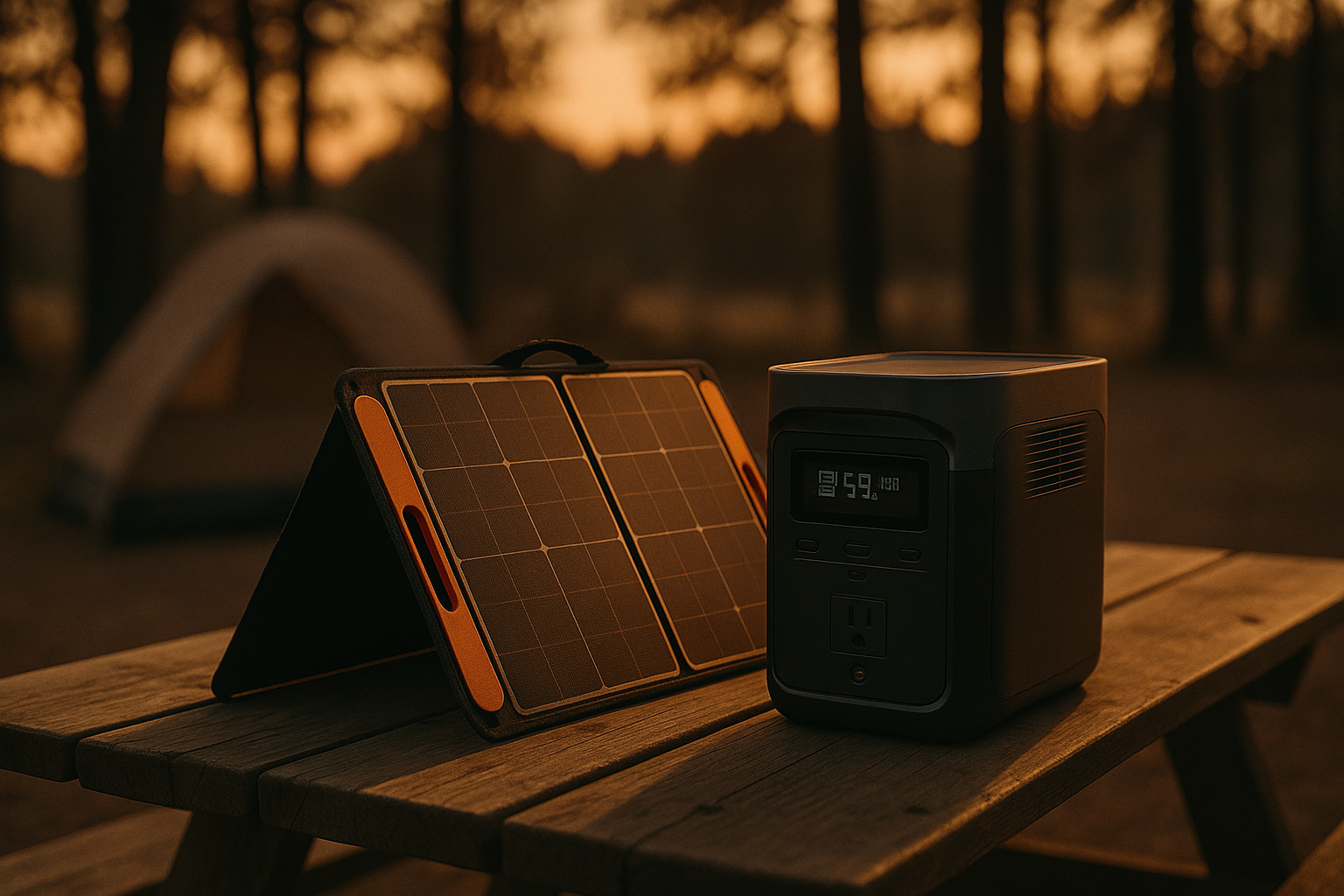
Best Foldable Solar Panels for Backpacking 2026

Best Foldable Solar Panels for Backpacking 2026
Foldable solar panels are the only realistic way to extend your phone and device runtime on multi-day backpacking trips without carrying a heavy generator or extra battery bank. Unlike rigid panels, they pack flat and weigh under two pounds, yet deliver enough wattage to charge a smartphone or small power station during daylight hours. This guide covers what actually matters on the trail: weight, real-world output in variable light, durability against moisture and abrasion, and whether a panel will fit in your pack without eating up precious space.
Why Foldable Panels Beat Rigid Alternatives for Backpacking
Rigid solar panels—the kind you’d mount on an RV or cabin roof—are dead weight in your pack. A 100W rigid panel weighs 8–12 pounds and requires a frame; it doesn’t fold, so it either gets strapped awkwardly to the outside of your pack (catching branches, slowing you down) or left behind entirely. Foldable panels collapse into a compact rectangle roughly the size of a laptop, weigh 2–5 pounds for 100–200W models, and stow inside your pack without fuss.
The trade-off is durability and longevity. Rigid panels last 25+ years in a stationary setup; foldable panels face repeated creasing, moisture exposure, and rough handling. Most owners report 3–5 years of reliable field use before efficiency noticeably drops, per long-running threads on r/CampingGear and r/Ultralight. That’s more than enough for backcountry trips, and the weight savings justify replacing a panel sooner.
Understanding Wattage vs. Real-World Charging Speed
Panel wattage is rated under ideal lab conditions: full sun, 77°F, panel perpendicular to the sun. On the trail, you’ll rarely hit those numbers. Cloud cover cuts output by 50–80%. Dust, pine needles, and morning dew reduce efficiency by 10–30%. Even on a clear day, the sun’s angle changes hour by hour.
A 100W panel in bright sunlight will charge a smartphone (5–10W draw) in 2–3 hours, per owner reports on r/CampingGear. The same panel on a hazy day might take 4–6 hours, based on field testing shared across multiple threads. If you’re charging a larger power station (200W+ capacity), expect 6–12 hours of midday sun to reach a full charge.
The takeaway: don’t buy based on wattage alone. Look for panels with high efficiency ratings (monocrystalline cells are more efficient than polycrystalline) and built-in USB ports so you can charge phones directly without a power station intermediary.
Portability and Pack Integration
Weight matters on long hikes. A 5-pound panel sounds trivial until you’re 8 miles in and your shoulders are aching. Most foldable solar panels weigh between 2 and 5 pounds; anything heavier than 5 pounds is borderline impractical for backpacking unless you’re car camping or hiking short distances.
Dimensions when folded are equally important. A panel that unfolds to 24” × 48” but folds to 12” × 24” will fit in most backpacks. Panels that fold into long, narrow rolls (like some 200W models) can be awkward to pack alongside a tent and sleeping bag. Check owner reviews on YouTube for packing videos; you’ll see how the panel actually fits in real packs, not just manufacturer renderings.
Attachment points matter too. Look for integrated kickstands or loops so you can angle the panel toward the sun without holding it. A panel that requires you to babysit it for hours is impractical on a hiking trip where you want to set it and hike to a water source or cook dinner.
Monocrystalline vs. Polycrystalline: What’s the Real Difference?
Monocrystalline panels (made from a single silicon crystal) are 15–22% efficient per manufacturer lab specs; polycrystalline panels (made from multiple crystals) are 13–16% efficient under the same conditions. In typical field performance, monocrystalline panels produce about 10–15% more power per square inch than polycrystalline equivalents, so they’re smaller and lighter for the same wattage. They also perform slightly better in low-light conditions (overcast skies, early morning).
The downside: monocrystalline panels cost 10–20% more than polycrystalline equivalents. For backpacking, the efficiency gain translates to 30–60 minutes faster charging per day, which adds up on multi-week trips. If you’re only backpacking 2–3 weekends a year, polycrystalline is fine. If you’re a frequent backcountry user or planning a long-distance hike, monocrystalline is worth the premium.
Both types degrade at similar rates (about 0.5% per year in stationary use; slightly faster in field conditions), per manufacturer spec sheets from leading brands.
Durability and Weather Resistance
Foldable panels live a rough life. They’re folded and unfolded hundreds of times, exposed to rain, dust, and temperature swings. The weak points are the hinges (where creasing eventually cracks cells) and the connector ports (where water seeps in).
Look for panels with reinforced hinge design and sealed USB/DC ports. According to owner reports on r/CampingGear, panels with rubber gaskets around connectors last noticeably longer in wet conditions. Avoid panels where the hinge is just a thin fabric strip; those fail within 1–2 years of heavy use.
IP Rating Comparison: | Panel | IP Rating | |-------|-----------| | Anker 625 Solar Panel | IP54 | | Goal Zero Nomad 200 | IP65 | | Jackery SolarSaga 100W | IP54 | | Renogy 100W Foldable | IP54 |
Water resistance is not waterproofing. Most foldable panels carry IP54 ratings (splash-resistant), meaning light rain won’t kill them, but submerging them will. The Goal Zero Nomad 200 achieves IP65 (dust-tight, water-jet resistant), making it the most weather-resistant option for extended backcountry use. Store the panel in a dry stuff sack, and wipe it dry after rain. A few owners report success with thin adhesive waterproof tape around seams, but that voids warranties.
UV exposure degrades panel efficiency over time, even in storage. Keep your panel in a dark bag when not in use; don’t leave it in a sunny car window for months.
Charging Cables and Connector Compatibility
Foldable panels come with USB-A, USB-C, or DC connectors (or some combination). USB ports are convenient for direct phone charging, but they limit your options if you want to charge a larger power station or battery bank.
DC connectors (Anderson PowerPole, XT60, or proprietary connectors) are more versatile. They allow you to daisy-chain multiple panels or connect to a power station that accepts DC input. If you already own a portable power station, check its input connector type before buying a panel; mismatched connectors mean buying an adapter, which adds weight and cost.
USB-C is becoming standard on newer phones and power banks, so panels with USB-C output are increasingly practical. However, USB ports limit current (typically 2–3A), so they charge phones slowly compared to a DC connection to a power station.
Top Picks for 2026
Best for ultralight trips: Anker 625 Solar Panel Anker’s 625 delivers 100W per manufacturer specs in a 2.5 lb package with a compact fold. Monocrystalline cells provide good low-light performance. Owner reviews on Amazon consistently report 2–3 hour charging times for phones in full sun. The panel includes USB-A and USB-C ports, plus a DC output for larger devices. Hinge design has held up well across multiple owner reports; most users report no degradation after 2+ years of regular backpacking use. Pairs well with mid-size power stations (100–200Wh) via USB-C or DC output.
Best for extended backcountry: 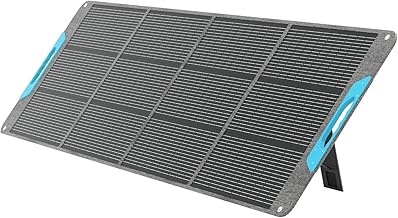
Best budget option: 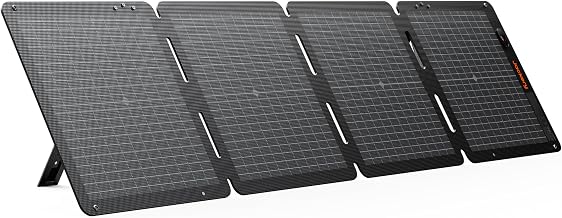
Best ultralight option: 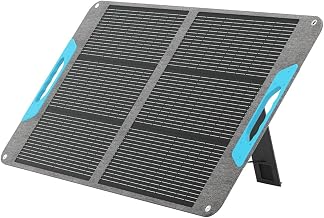
Real-World Scenario: 5-Day Backpacking Trip
To ground these specs in practice, here’s what you’d actually charge on a typical 5-day trip:
Devices: Smartphone (3,000mAh, ~12Wh), power bank (10,000mAh, ~37Wh), headlamp (rechargeable, ~5Wh)
Daily usage: Smartphone drained to 20% by evening; power bank used to top it up overnight; headlamp recharged every 2–3 days.
Daily charging requirement: ~20Wh (phone top-up) + ~15Wh (headlamp every other day) = ~20–25Wh average per day.
With a 100W monocrystalline panel in good weather: - 4–5 hours of useful midday sun yields ~300–400Wh of output (accounting for angle and efficiency losses). - This covers your 20–25Wh daily need plus 10–15Wh buffer for cloudy days. - You can charge all devices daily and still have surplus for a power station if you’re carrying one.
On a hazy day (50% output): - Same panel yields ~150–200Wh in 4–5 hours. - Still covers daily needs, but with less buffer. Charging takes longer (5–6 hours instead of 3–4).
With a 200W panel: - You’d reach your daily requirement in 2–3 hours of good sun, freeing up time for hiking or camp tasks. - Overkill for phone-only trips, but valuable on longer expeditions or if you’re charging a larger power station.
This scenario assumes clear-sky conditions for 2–3 days and hazy conditions for 1–2 days—realistic for most backpacking regions.
Pairing Your Panel with a Power Station
Foldable solar panels work best when paired with a portable power station. A panel alone can charge your phone, but a power station lets you store solar energy for use after sunset, charge multiple devices simultaneously, and power larger gear (like a CPAP machine or electric stove).
Panel-to-power-station pairing examples: - Anker 625 (USB-C/DC output) pairs well with Anker 535 or similar mid-size stations (256Wh) via USB-C, or with larger stations via DC adapter. - Goal Zero Nomad 200 (XT60 connector) integrates directly with Goal Zero Yeti series power stations, or with other brands via XT60-to-Anderson adapter. - Jackery SolarSaga 100W (proprietary connector) works best with Jackery Explorer series power stations; other brands require an adapter. - Renogy 100W (proprietary MC4 connector) pairs with Renogy power stations or other MC4-compatible systems.
Check your power station’s input connector before purchasing a panel. Mismatched connectors add in adapter costs and extra weight.
For detailed comparisons of power stations that integrate well with foldable panels, see Best Portable Power Stations for Camping: Weight & Runtime Tested.
If you’re new to solar backpacking, Portable Solar Panels for Camping: Reviews and Buyer's Guide covers the broader landscape of portable solar options, including rigid panels for car camping and semi-portable setups.
FAQ
Q: What’s the difference between MPPT and PWM charge controllers, and do I need one? A: MPPT (Maximum Power Point Tracking) controllers are more efficient than PWM (Pulse Width Modulation) controllers; they extract 15–25% more power from a solar panel by dynamically adjusting voltage. PWM controllers are simpler and cheaper but waste some energy as heat. Most modern portable power stations have built-in MPPT regulators, so you don’t need a separate controller. Check your power station’s manual to confirm it supports “solar charging” or “MPPT input.” Older or budget models may require an external controller, adding ~ and 0.5–1 lb to your setup.
Q: Can I use a foldable panel in snow or at high altitude? A: Yes, but with caveats. Snow reflects sunlight, potentially boosting output by 10–20% if the panel is angled correctly. However, snow accumulation on the panel blocks light entirely; you’ll need to brush it off frequently. At high altitude (above 8,000 ft), thinner atmosphere means slightly higher UV intensity and potentially better panel output, but colder temperatures reduce efficiency by ~0.5% per degree Celsius below 25°C. Most panels perform adequately at altitude; the bigger challenge is keeping them dry and snow-free. Store your panel in a waterproof bag and wipe it clean before each use.
Q: How do I know if my power station’s input connector matches my panel’s output connector? A: Check your power station’s manual for “solar input” or “DC input” specifications. It will list the connector type (XT60, Anderson PowerPole, MC4, USB-C, or proprietary). Match this to your panel’s output connector. If they don’t match, you’ll need an adapter cable (typically ). Many retailers sell universal adapter kits; confirm compatibility before buying.
Q: Will a foldable panel work on cloudy days or indoors? A: Foldable panels produce 10–30% of rated output on cloudy days, depending on cloud density. Indoors (near a window), output drops to 5–10% of rated capacity because window glass blocks some UV light and diffuses the remaining light. For reliable charging, plan on using your panel outdoors in daylight. Cloudy days are viable but slow; don’t rely on panels for charging indoors.
Q: How do I store my panel to maximize lifespan? A: Keep it in a dark, dry stuff sack when not in use. UV exposure degrades cells even when the panel isn’t actively charging. Store in a cool location (avoid hot car trunks). Avoid folding the panel tightly for months; periodically unfold and refold it to prevent permanent creases. Before storing for winter, wipe connectors dry and inspect hinges for cracks. Most owners report 3–5 years of reliable field use with proper storage; neglected panels degrade faster.
Final Takeaway
Foldable solar panels are practical only if you’re willing to set them up and monitor them during daylight hours. They’re not passive—you can’t just pack them and forget about them. But if you’re comfortable spending 30 minutes a day managing your charging setup, a 100–200W foldable panel will keep your devices alive on extended backpacking trips without the weight penalty of carrying extra battery banks.
For most backpackers, a 100W monocrystalline panel in the mid-tier price range is