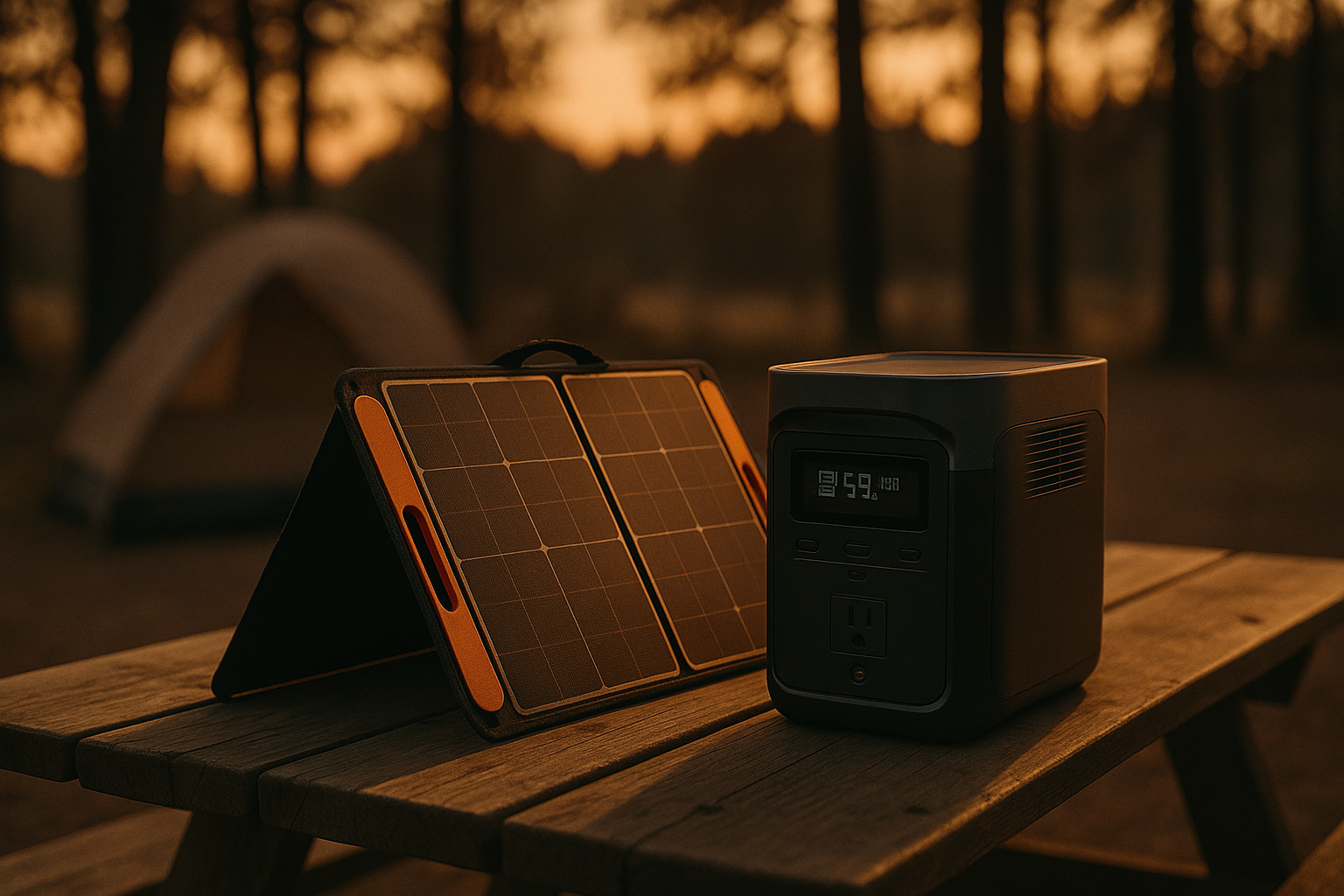
Cheapest Solar Generator for Camping: Budget Picks 2026

Cheapest Solar Generator for Camping: Budget Picks 2026
For a 2-day car camping trip with a phone, laptop, and LED light, a 300Wh budget solar generator and recharges fully in 6–8 hours via solar panel. This guide shows you what budget-friendly models actually deliver, how to match capacity to your trip length, and where to find genuine deals without sacrificing reliability.
What Makes a Solar Generator “Budget-Tier”?
Budget-tier solar generators typically fall into two categories: entry-level standalone units (battery + inverter combo, no panels included) under mid-range pricing, and full kits bundled with smaller solar panels that cost less than premium all-in-one systems.
Key budget-tier trade-offs:
- Smaller capacity (100–600Wh): Ideal for phones, lights, small coolers, and USB devices. Not suitable for power-hungry appliances like air compressors or large electric cookers.
- Slower charge times: Budget models often lack fast-charging inputs, so solar recharge cycles take longer on cloudy days or with limited panel wattage.
- Lighter weight: Smaller batteries mean easier transport, but less runtime per charge.
- Fewer ports: Fewer AC outlets (often just one), fewer USB-A slots, sometimes no wireless charging or car-charging inputs.
- Shorter warranty: Many budget units carry 1–2 year coverage instead of the 5–10 year warranties on premium brands.
Despite these trade-offs, budget solar generators deliver solid reliability per dollar spent for light-to-moderate camping use.
Understanding Capacity: How Much Power Do You Actually Need?
Solar generator capacity is measured in watt-hours (Wh). Here’s a practical breakdown:
100–200Wh (budget-tier entry) - Charges a 3000mAh phone (at 10W draw) approximately 10 times - Runs a LED camping light (5W) for 20–40 hours - Powers a small USB fan (15W) for 8–12 hours - Best for: car camping where you can recharge nightly via solar or car charger
300–500Wh (sweet spot for budget camping) - Charges a phone 15–25 times - Powers a small cooler for 4–6 hours - Runs a laptop for 4–8 hours (depending on model) - Supports a CPAP machine for one night - Best for: 2–3 day trips with modest loads
600Wh+ (larger budget-tier models) - Charges multiple devices simultaneously - Powers a small refrigerator for 6–10 hours - Runs power tools for short jobs - Best for: group camping, longer trips, or if you plan to use it as emergency home backup
To estimate your needs, list the devices you’ll use and their wattage (check the label or manual). Add them up, then multiply by hours of daily use. For example: - Phone charger (10W) × 3 hours = 30Wh - LED light (5W) × 8 hours = 40Wh - Portable fan (15W) × 4 hours = 60Wh - Daily total: ~130Wh
A 300Wh generator would cover this with room for a second day or unexpected use.
Budget Solar Generator Models Worth Considering
Entry-Level Standalone Units (Under 200Wh)
These are the cheapest way to get started with solar power. They often ship without panels, so you’ll pair them with a portable solar panel or use a car charger.
Jackery Explorer 100
A compact, lightweight unit popular with backpackers and car campers. Per manufacturer spec sheet, it holds 99Wh and weighs under 1 kg. Based on aggregated Amazon owner reviews, the unit reliably charges phones and small USB devices; owners report using it for 2–3 day trips without needing additional solar input if they top it up via car charger during the day. The single AC outlet handles USB chargers and small adapters but not power-hungry devices. Warranty is 2 years.
ALLPOWERS Portable Power Station 100W
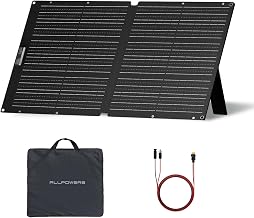
A budget alternative with 99Wh capacity. Per manufacturer specs, it includes a built-in 10W solar panel (very slow for outdoor recharging, but useful as a backup). Owners report similar real-world performance to the Jackery Explorer 100, with slightly slower charge times from the internal panel. Good if you want a no-fuss, all-in-one setup without buying separate solar panels.
Mid-Tier Budget Models (300–600Wh)
These offer the best value for typical camping trips. They’re heavier than entry-level units but provide enough runtime for 2–3 days with modest loads.
EBL Portable Power Station 600W
EBL Portable Power Station 600W
Delivers 600Wh capacity with a 600W pure sine-wave inverter. Per manufacturer spec sheet, it weighs around 6.5 kg and includes two AC outlets, four USB-A ports, and a car-charging input. Based on owner reports across multiple forums, this unit handles small appliances like a CPAP machine, portable cooler, or laptop simultaneously. Charge time from a standard wall outlet is around 8–10 hours; solar recharge is slower depending on panel wattage. Warranty is 2 years. Owners appreciate the dual AC outlets, a rarity at this price point.
Bluetti AC30
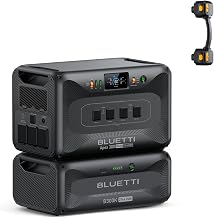
A 768Wh unit positioned as a budget-friendly alternative to Bluetti’s premium lineup. Per manufacturer specs, it weighs 7.5 kg and delivers 600W continuous output. Owner reports on Reddit threads like r/CampingGear and r/SolarPower note that the AC30 handles multiple devices well and charges faster than some competitors when paired with a high-wattage solar panel. The build quality feels solid for the price tier. Warranty is 3 years. Note: This model is sometimes sold bundled with a small solar panel kit, which can represent better value than buying separately.
Jackery Explorer 240
A 240Wh unit that sits between entry-level and mid-tier. It’s lighter than the 600Wh models (~2.5 kg) but offers more runtime than the 100Wh Explorer. Per owner feedback, it’s a popular choice for weekend trips where weight matters but capacity needs to be higher than the smallest units. Two USB-A ports and one AC outlet. Warranty is 2 years.
Budget Kits: Generator + Solar Panel Bundles
Buying a generator and solar panel separately often costs more than a bundled kit. Budget-tier bundles typically pair a smaller generator (200–400Wh) with a 50–100W folding solar panel.
ALLPOWERS Solar Generator 200W Bundle
ALLPOWERS Solar Generator 200W
A 288Wh unit bundled with a 100W foldable solar panel. Per manufacturer specs, the panel charges the battery in roughly 3–4 hours in direct sunlight (faster than smaller internal panels, slower than premium 200W+ panels). Owner reports indicate this bundle is a good entry point if you want true solar autonomy without spending premium-tier money. The panel is durable and folds compactly. Warranty on the generator is 2 years; panels typically carry 1 year. Note: The generator is also available as a standalone unit without the panel.
Jackery SolarSaga 100W + Explorer 240 Bundle
The Jackery Explorer 240 pairs well with the SolarSaga 100W panel (sold separately or as a bundle on some retailers). Combined, you get 240Wh storage and genuine solar charging in a lightweight, portable setup. Per owner reports, this combination is popular with van lifers and car campers who want flexibility without the weight of a larger system.
How Budget Solar Generators Compare to Other Camping Power Options
Solar Generator vs. Portable Power Bank
A portable power bank (10,000–20,000mAh) is cheaper upfront but only charges phones and small USB devices. A solar generator covers phones, lights, fans, and small appliances. If your camping trip is phone-only, a power bank is sufficient; otherwise, a solar generator is more versatile.
Solar Generator vs. Gas Generator
Gas generators are cheaper upfront and deliver more power, but they’re loud, require fuel, and produce emissions. Solar generators are silent, zero-emission, and have no fuel costs—ideal for campgrounds with noise restrictions. Trade-off: solar generators need sunlight or wall-outlet charging; gas generators work anytime. Most campers choose solar for weekend trips and keep a gas generator for emergencies or remote sites.
Solar Generator vs. Portable Power Station Without Solar
A portable power station (like a Jackery or Bluetti without bundled panels) costs less than a solar generator kit but requires wall-outlet or car charging. If your campsite has car access or you can recharge at a lodge, a power station alone may suffice. If you need true off-grid autonomy, add solar panels.
Buying Tips: Where to Find the Best Deals
Watch for seasonal sales - Summer camping season (May–August): Prices peak; deals are rare. - Fall and winter (September–February): Retailers discount outdoor gear; this is when budget models see the deepest cuts. - Black Friday / Cyber Monday: Discounts vary by retailer and brand; check historical pricing on CamelCamelCamel or Keepa before purchasing.
Bundle vs. Buy Separate - Bundles (generator + panel) often save 10–20% vs. buying items individually. - However, if you already own a solar panel, buying a generator alone may be cheaper.
Warranty and Return Policy - Budget models ship with 1–3 year warranties. Check if your retailer offers extended protection plans. - Amazon and Best Buy typically allow 30-day returns; direct-from-manufacturer purchases may have shorter windows.
Certifications to Look For - FCC certification (ensures the inverter won’t interfere with radios). - UL listing (safety standard for electrical products). - CE mark (if purchasing from international sellers).
Budget models from established brands (Jackery, Bluetti, EBL, ALLPOWERS) all carry these certifications; avoid unbranded or no-name units.
Charging Your Budget Solar Generator in the Field
Solar Panel Charging - Pair your budget generator with a 50–100W portable solar panel for true off-grid charging. - In full sun, expect 4–8 hours to fully recharge a 300Wh unit (slower than wall charging but free and renewable). - Cloudy days drastically reduce charging speed; plan for 12–16 hours or longer.
Car Charging - Most budget generators accept 12V car charger inputs. Plug into your vehicle’s 12V outlet or use an inverter. - Charging speed depends on your car’s alternator output; expect 8–12 hours for a full recharge while driving. - Useful for topping up during the day without relying on solar.
Wall Outlet Charging - All budget generators charge from standard 110V outlets (or 220V in some regions). - Charge time: 6–10 hours for 300–600Wh units. - Do this before you leave home or at a lodge/campground with power.
Real-World Runtime Expectations
Budget solar generators don’t always deliver the advertised runtime because actual power draw varies. These estimates assume 85% inverter efficiency (typical for budget models) and no simultaneous charging.
- Charging a phone (10W charger): A 300Wh unit runs for ~30 hours at 10W draw.
- Running a LED camping light (5W): ~60 hours per 300Wh charge.
- Powering a small cooler (50W): ~6 hours per 300Wh charge.
- Running a laptop (60W average): ~5 hours per 300Wh charge.
Real-world use is usually lower because you’ll top up the battery during the day and use multiple devices.
FAQ
Q: Can I use a budget solar generator to power a camping fridge? A: Small portable coolers (50W) run for 6–10 hours on a 300Wh unit, based on owner reports. Full-size RV fridges (100W+) drain a 300Wh unit in 3–4 hours. If you need continuous fridge power, consider a larger generator (600Wh+) or pair your budget unit with a high-wattage solar panel for daily recharging.
Q: How long do budget solar generators last? A: Per manufacturer specs and owner reports, lithium-ion batteries in budget generators retain 80% capacity after 500–1000 charge cycles (roughly 2–5 years of regular use). Most budget units carry 2–3 year warranties; some brands offer longer coverage. Lifespan depends on how often you charge and discharge—occasional camping use extends life; daily use shortens it.
Q: Do I need a separate solar panel, or is the built-in panel enough? A: Built-in panels (like the ALLPOWERS 10W internal panel) are convenient but slow. A separate 50–100W portable panel charges 5–10x faster. If you plan to camp for 3+ days without wall power, a separate panel is worth the investment. If you’re car camping and can top up via car charger or wall outlet, the built-in panel is sufficient for backup.
Q: What’s the difference between a “solar generator” and a “power station”? A: Technically, a power station is just the battery + inverter. A solar generator is a power station bundled with or designed to accept solar panels. In practice, the terms are used interchangeably. The key is whether you plan to charge via solar (generator) or just wall/car outlets (power station).
Q: Can I use a budget solar generator as emergency home backup? A: Yes, but only for essential devices (phone, lights, medical equipment). A 300Wh unit runs a laptop or CPAP for one night; it won’t power a refrigerator or air conditioner continuously. For whole-home backup, consider larger battery systems designed for that purpose.
Q: Are budget solar generators safe to use indoors? A: Yes. Budget generators use lithium-ion batteries with pure sine-wave inverters, which produce AC power identical to wall outlets. They emit no fumes and generate minimal heat. Safe for tents, RVs, and homes.