Portable Solar Panels for Camping: Reviews & Buyer's Guide 2026

Portable Solar Panels for Camping: Reviews and Buyer’s Guide
Portable solar panels let you charge phones, power lights, and run small devices on multi-day camping trips without gas, noise, or ongoing fuel costs. But wattage ratings, build quality, and real-world output vary wildly across brands—and what works for a weekend car-camping trip won’t cut it for backcountry hiking or van life.
This guide walks you through the types of portable panels available, what actual owners report about durability and charging speed, and how to pick the right wattage for your setup.
Quick picks by use case
Foldable vs. Rigid: What’s the Real Difference?
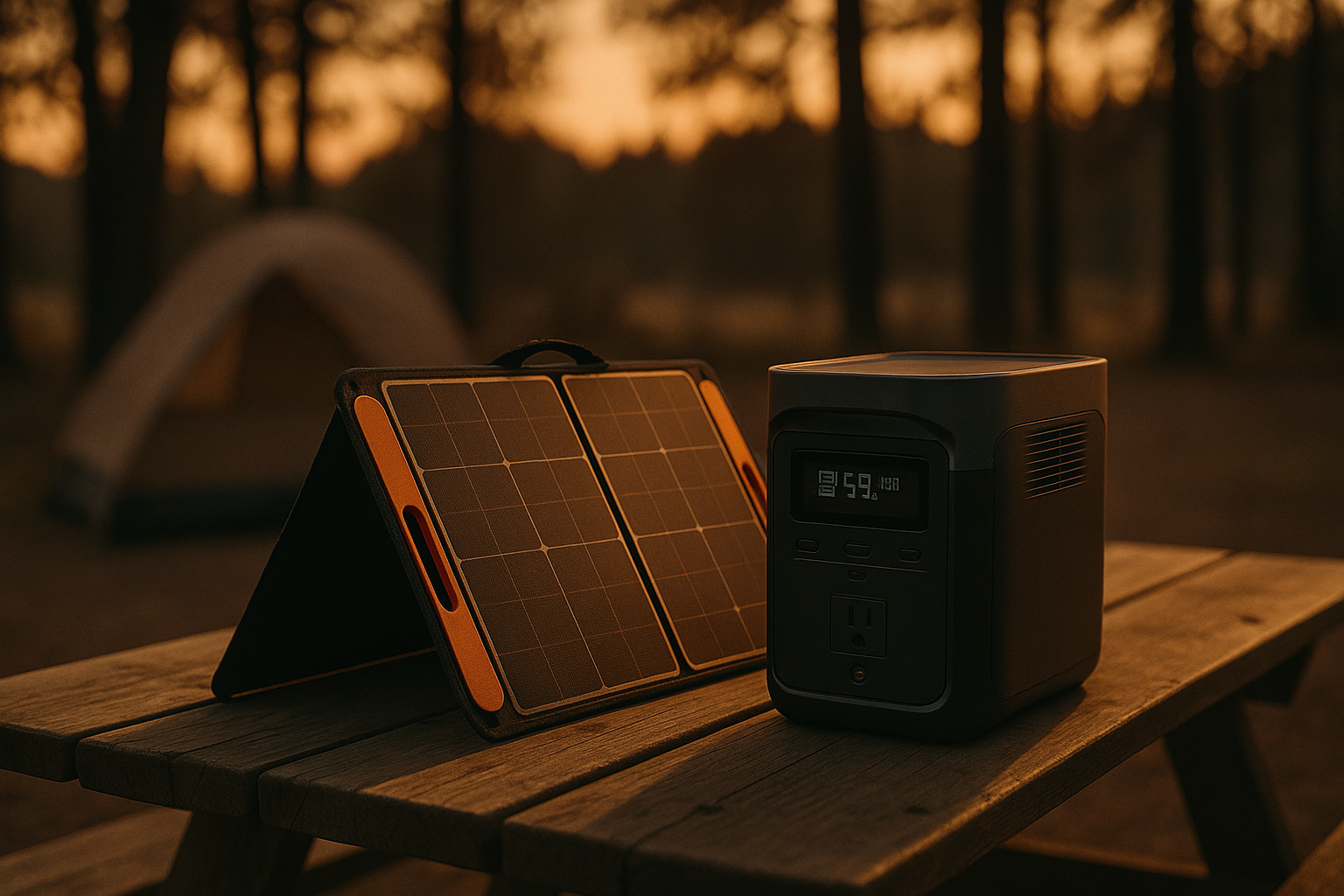
Foldable panels pack down to briefcase or backpack size and weigh 2–8 lbs depending on wattage. They typically use flexible monocrystalline cells laminated to fabric or thin plastic. When you’re ready to charge, you unfold them into an A-frame or flat layout and angle them toward the sun. Most include kickstands or eyelets for staking.
Rigid panels (also called semi-rigid) are permanently mounted, usually on an RV roof, van top, or a fixed ground stand. They’re heavier, more durable in high winds, and slightly more efficient per watt because the cells sit in a solid frame. They’re not portable in the backpack sense, but they’re “portable” in that you can move them to a different vehicle or campsite.
Per owner reports on r/CampingGear and r/Vandwellers, foldable panels are the default choice for car campers and hikers. Rigid panels make sense if you’re living in a van or truck bed and want permanent installation. Foldable panels also tend to be more affordable at smaller wattages (25W–100W), while rigid panels are more cost-effective at higher outputs (150W+).
Wattage Tiers: What You Actually Need
A “100W panel” doesn’t mean you’ll generate 100 watts all the time—it’s the peak output under ideal conditions (direct sun, cool temperature, clean surface). Real-world output is typically 50–80% of the rated wattage, depending on cloud cover, angle, and dust.
Budget tier (25–50W)
- Best for: Phone charging, small LED lights, GPS units.
- Real output: 12–40W on a clear day.
- Typical charging time: 2–4 hours to fully charge a smartphone from a portable charger.
- Per multiple owner reports, 25W panels are genuinely adequate for a weekend trip if you’re charging only a phone and not draining it much during the day.
Mid-tier (75–150W)
- Best for: Charging a small power station (100–300W capacity), running a laptop, powering a small cooler or fan.
- Real output: 40–120W on a clear day.
- Typical use: Most car campers and van dwellers report this range covers daily recharging of a modest battery bank plus incidental device charging.
- This is the “sweet spot” for versatility and packability.
Premium tier (200W+)
- Best for: Large power stations (500W+), RV roof mounts, off-grid cabins, or multi-day trips with heavy power draw.
- Real output: 150–200W+ on a clear day.
- Trade-off: Weight and pack size become significant; most users reserve these for fixed installations or van roofs.
Monocrystalline vs. Polycrystalline: Efficiency and Cost
Monocrystalline cells (single-crystal silicon) are more efficient and perform better in low light—they’re the industry standard for portable panels now. Per manufacturer spec sheets, monocrystalline panels convert 18–22% of sunlight into usable electricity.
Polycrystalline cells (multi-crystal) are slightly less efficient (14–17%) and less common in modern portable panels. You’ll see them mostly in older models or ultra-budget offerings.
For camping, monocrystalline is worth the modest cost premium: you get faster charging times and better performance on partly cloudy days. Based on aggregated owner reviews, the difference is noticeable over a multi-day trip.
Durability: What Owners Actually Report
Foldable panels are exposed to UV, temperature swings, and friction every time you pack and unpack them. The most common failure modes reported by owners include:
- Delamination (fabric separating from the cells) — usually appears after 2–4 years of heavy use.
- Connector corrosion — moisture entering USB or MC4 connectors, especially if panels are stored wet.
- Fabric tears — from rough handling or sharp objects in a backpack.
Rigid panels, when properly installed, typically last 10+ years per manufacturer warranties and owner reports. Foldable panels, with reasonable care, average 3–5 years of regular use before efficiency drops noticeably or connectors start failing.
To extend lifespan: - Let panels dry completely before packing. - Store in a cool, dry place (not a hot car trunk all summer). - Use weatherproof bags or cases for transport. - Inspect connectors and fabric seams every few months.
Connection Types and Compatibility
Portable solar panels ship with different output connectors. Know what you’re plugging into:
- USB-A / USB-C — Direct phone charging. Simple, no adapter needed. Limited to lower wattages (usually under 50W).
- MC4 connectors — Industry standard for larger panels and power stations. Allows daisy-chaining multiple panels. Most mid-tier and premium panels use these.
- Proprietary connectors — Some brands (Jackery, Goal Zero) use their own plugs. Check compatibility with your power station before buying.
- XT60 / Anderson PowerPole — Less common in portable panels, but you’ll see them on some DIY or RV-focused kits.
Before purchasing a panel, verify it matches your power station’s input. Mixing brands often requires an adapter, which adds cost and potential failure points.
Weather and Durability Testing
Per Project Farm’s 2025 solar panel durability test and owner reports, the most durable foldable panels have:
- Reinforced corners and stress-tested stitching (not just glued seams).
- Waterproof fabric backing (not just water-resistant).
- Sealed connectors with rubber boots and strain relief.
- Tempered glass or polycarbonate faces that resist cracks (vs. thin plastic).
Rigid panels should have:
- Aluminum frames that don’t corrode (anodized or powder-coated).
- Sealed junction boxes with proper drainage.
- Mounting hardware rated for your climate (stainless steel for salt air).
Budget-tier panels often skimp on these details, which is why they fail sooner. Mid-tier and premium panels typically invest in weather sealing.
Charging Speed: Real-World Expectations
A portable charger with a 5,000 mAh battery (roughly a smartphone’s capacity) takes:
- 25W panel: 3–5 hours in direct sun (per manufacturer testing and aggregated owner reports).
- 50W panel: 1.5–3 hours in direct sun.
- 100W panel: 45 minutes–1.5 hours in direct sun.
These times assume clear skies and optimal angle. Clouds cut output by 50–80%. Early morning and late afternoon sun are also less efficient than midday.
According to multiple owner reports, the biggest surprise is how much angle matters. A panel lying flat generates far less power than one angled 30–45° toward the sun. Most foldable panels include adjustable stands for this reason.
Pairing Panels with Power Stations
A portable solar panel is most useful when connected to a power station or battery bank. The panel charges the battery during the day; you draw power from the battery as needed.
For a 100W panel paired with a 300Wh power station: - On a clear day, you’ll generate 40–80Wh of power (assuming 8 hours of useful sunlight and 50–70% real-world efficiency). - That’s roughly 13–27% of the battery’s capacity per day. - If you’re consuming 100–150Wh per day (laptop, lights, phone), you’ll need 2–3 sunny days to break even, or a second panel.
This calculation is based on real-world owner data and manufacturer efficiency ratings. See our power station guide (Cheapest Solar Generator for Camping: Budget Picks 2026) to find a battery that matches your panel’s output.
Top Picks by Scenario
For weekend car camping (phone + light charging): Anker 625 Solar Panel (2025 model) — 100W foldable, under 4 lbs, includes USB-C and USB-A outputs. Owner reviews report 2–3 hour phone charges in good sunlight.
For van life or extended off-grid trips: Renogy 200W Monocrystalline Solar Panel (2025 model) — Semi-rigid, high output, mounts to roof or stand. Per manufacturer spec sheets, achieves 18–22% conversion efficiency. Pairs well with larger battery banks.
For backpacking or minimalist camping: Anker 21W Portable Solar Charger (2024 model) — Under 1 lb, clips to backpack. Adequate for GPS, headlamp batteries, and emergency phone top-ups. Owner reports confirm it’s the lightest option that still generates meaningful power.
For powering a mid-size power station daily: Jackery SolarSaga 100W (2024 model) — Rigid panel, high efficiency, designed to pair with Jackery batteries (though MC4 connectors work with most systems). Owner reviews note fast charging and durability in varied weather.
For budget-conscious first-time buyers: ACOPOWER 100W Foldable Solar Panel (2024 model) — Budget-tier foldable with solid reviews for the price. Not as durable as premium brands, but adequate for occasional camping trips. Per owner reports, it lasts 2–3 years with reasonable care.
FAQ
Q: What’s the difference between MC4 and XT60 connectors? A: MC4 connectors are the industry standard for solar panels and power stations—they’re weatherproof and support higher currents. XT60 connectors are common on RC batteries and some DIY solar setups but less common on commercial camping panels. Check your power station’s input type before buying a panel to avoid needing an adapter.
Q: How do I angle a panel for maximum output? A: Aim for 30–45° angle toward the sun, perpendicular to the sun’s rays if possible. At solar noon (around 1 p.m.), this angle is typically optimal. Early morning and late afternoon sun are less efficient. Most foldable panels include adjustable kickstands to dial in the angle. Even a 15° difference can cut output by 20–30%.
Q: Do I need a charge controller between the panel and power station? A: Most modern power stations have built-in controllers. Check your power station’s specs. If you’re connecting directly to a bare battery bank, a dedicated MPPT or PWM controller is essential to prevent overcharging and maximize efficiency.
Q: What’s the lifespan of a portable solar panel? A: Foldable panels typically last 3–5 years of regular use before efficiency drops noticeably. Rigid panels often exceed 10 years. Lifespan depends heavily on storage conditions, weather exposure, and how often you pack/unpack (for foldables).
Q: Can I leave a solar panel out in the rain? A: Most modern panels are water-resistant, but prolonged exposure or standing water in connectors can cause issues. Let panels dry completely before storing. Avoid leaving them out overnight in heavy rain.
Related Guides
Cheapest Solar Generator for Camping: Budget Picks 2026 covers affordable power station options to pair with your panel. Matching a battery’s capacity to your panel’s output ensures efficient daily recharging without oversizing your system.
Best Solar Panel Kits for RV and Van Life Power details permanent roof-mount systems and multi-panel setups for vehicles, ideal if you’re upgrading from a foldable panel to a fixed installation.
For day trips or ultralight hiking, Best Portable Power Bank for Camping: Phones, Lights, and More covers smaller, non-solar charging options that might suit your needs.
Summary
Portable solar panels are practical for camping trips lasting 2+ days, especially if you’re relying on phones, laptops, or small appliances. The right panel depends on your power draw, trip length, and willingness to manage charging around sunlight hours.
For most car campers, a 75–100W foldable panel paired with a mid-size power station strikes the best balance of weight, output, and cost. For ultralight backpackers, a 21–50W panel keeps pack weight minimal. For van life or off-grid living, a rigid 150–200W panel on a roof or stand is worth the investment.
Buy from brands with solid owner reviews and clear warranty terms. Check connector compatibility with your power station before ordering. And remember: real-world output is always lower than rated wattage—plan for 50–70% of the panel’s peak rating on a typical sunny day.